Google Veo 3.1 vs OpenAI Sora 2 (2026) | Honest Comparison — Which AI Video Tool Actually Won?
For the better part of 2025, two names dominated every conversation about AI video: Veo 3.1 vs Sora 2 (2026) Sora.
Every week, someone posted a new comparison. Every month brought a new update. Creators argued over which one looked better. Developers debated which had the better API. And regular people — the ones who just wanted to make something cool — were stuck in the middle trying to figure out which tool to even bother learning.
In 2026, we finally have a clear picture. And the answer is more interesting than most people expected — because one of these tools is no longer available.
This article gives you the full, honest comparison: what Veo 3.1 does well, what Sora 2 did well, where each one fell short, and — most importantly — what the current landscape actually looks like for someone who wants to make AI videos right now.
Let’s get into it.
First, the Big News: What Happened to Sora 2?
Before comparing features, you need to know something important.
OpenAI Sora 2 is no longer available.
Sora 2 launched in September 2025 and was genuinely impressive — more realistic physics, synchronized audio, videos up to 25 seconds long, and a social media-style publishing interface. For a few months, it was the most talked-about AI video tool in the world.
Then, on March 24, 2026, OpenAI announced the discontinuation of the Sora platform. The consumer-facing Sora app went dark on April 26, 2026. The Sora API will follow later in September 2026.
Two main factors drove the shutdown: the enormous computing cost of running high-fidelity video generation at scale, and serious legal friction around the training data Sora 2 used, which relied on copyrighted material unless rights holders specifically opted out.
So as of the time you’re reading this, if you want to access Sora 2 directly through OpenAI’s own app, that option is gone.
What this means for this comparison: Veo 3.1 is the tool that’s actually available today. Sora 2 is what it was — and understanding where it stood helps you appreciate what Veo 3.1 had to measure up to, and where it genuinely surpassed its rival.
What Was OpenAI Sora 2? (Quick Background)
Sora 2 was OpenAI’s second-generation video model, released on September 30, 2025. It was a major step forward from the original Sora in every measurable way.
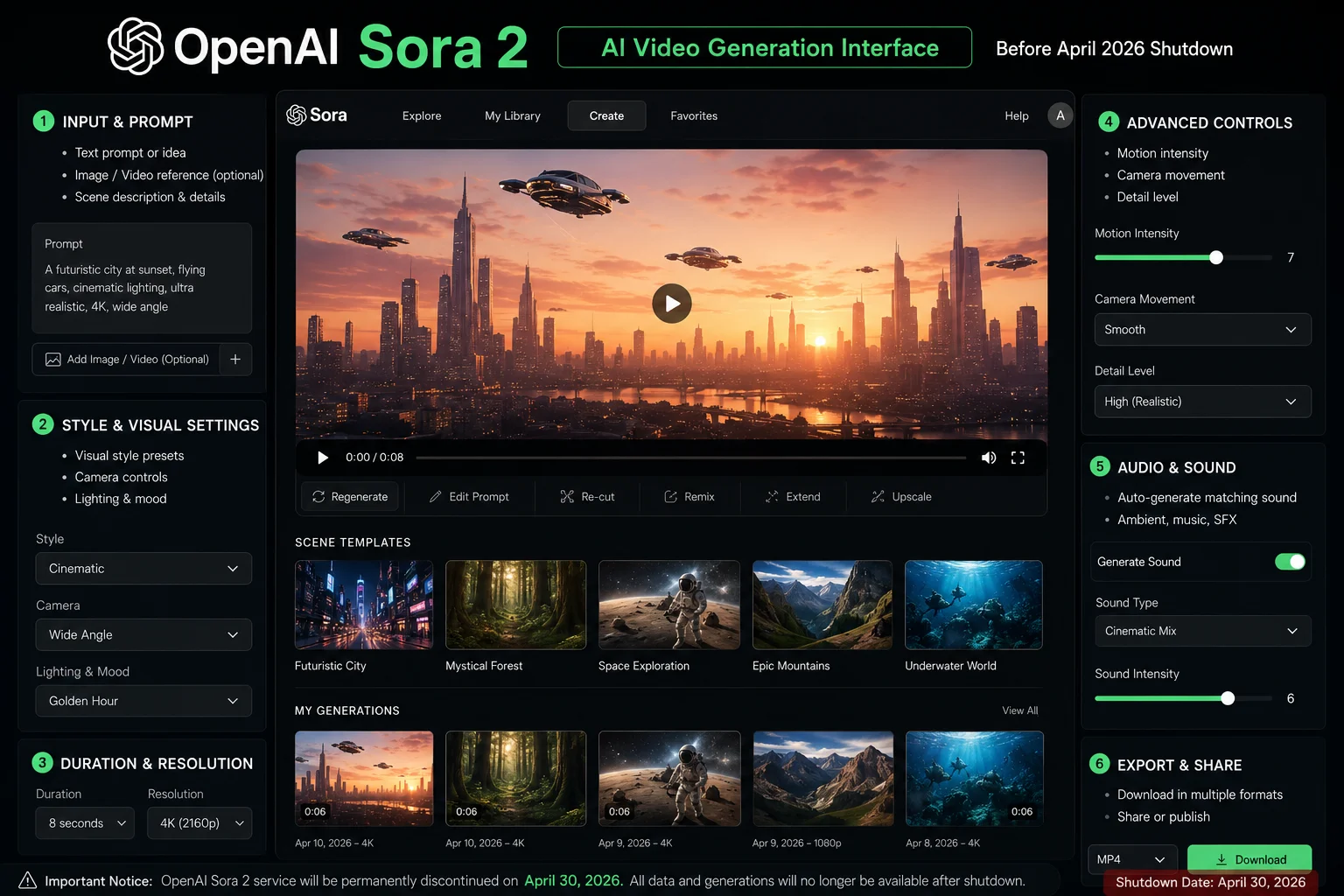
Here’s what Sora 2 brought to the table:
Longer videos — While original Sora was limited to 6-second clips, Sora 2 could generate videos up to 25 seconds long in a single generation. That’s a huge leap for storytelling.
Synchronized audio — Like Veo 3, Sora 2 could generate dialogue, sound effects, and ambient audio alongside the video — all in sync. No separate audio step needed.
More realistic physics — This was widely considered Sora 2’s strongest point. Water moved like water. Objects bounced with real-world momentum. Human movement looked natural rather than slightly robotic. Several independent tests found that Sora 2 edged out competitors specifically on physical plausibility.
Character consistency — Sora 2 improved significantly on keeping a character looking the same across multiple scenes — one of the hardest problems in AI video generation.
Social publishing — Sora 2 launched with a TikTok-style discovery feed built into the app, where creators could share their generated videos publicly.
Was it perfect? No. The cinematic look occasionally felt slightly artificial. Very long or complex prompts sometimes produced inconsistent results. And, as we now know, it ultimately couldn’t survive the economics and legal challenges of the video AI space.
What Is Google Veo 3.1? (The Contender That’s Still Here)
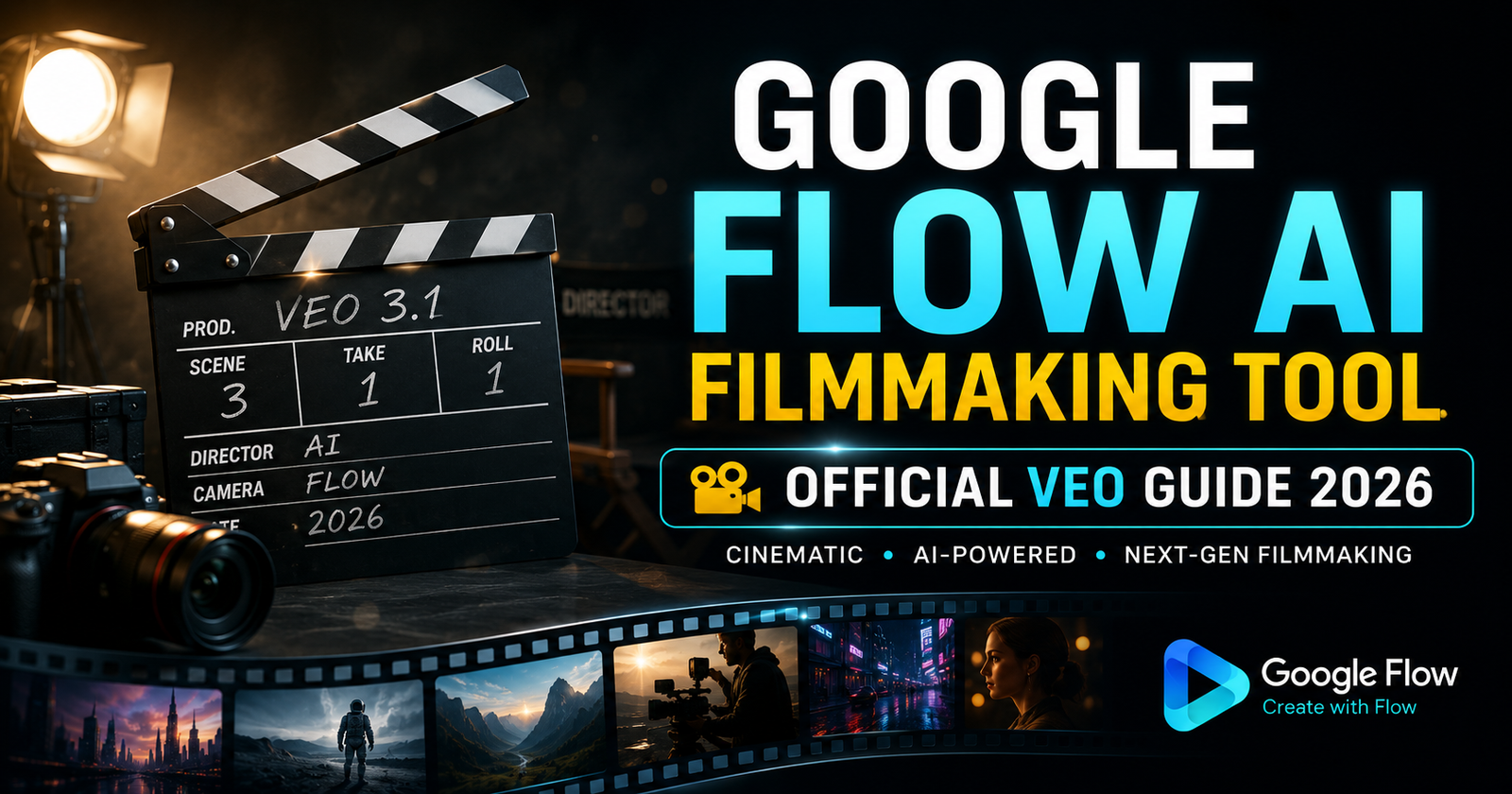
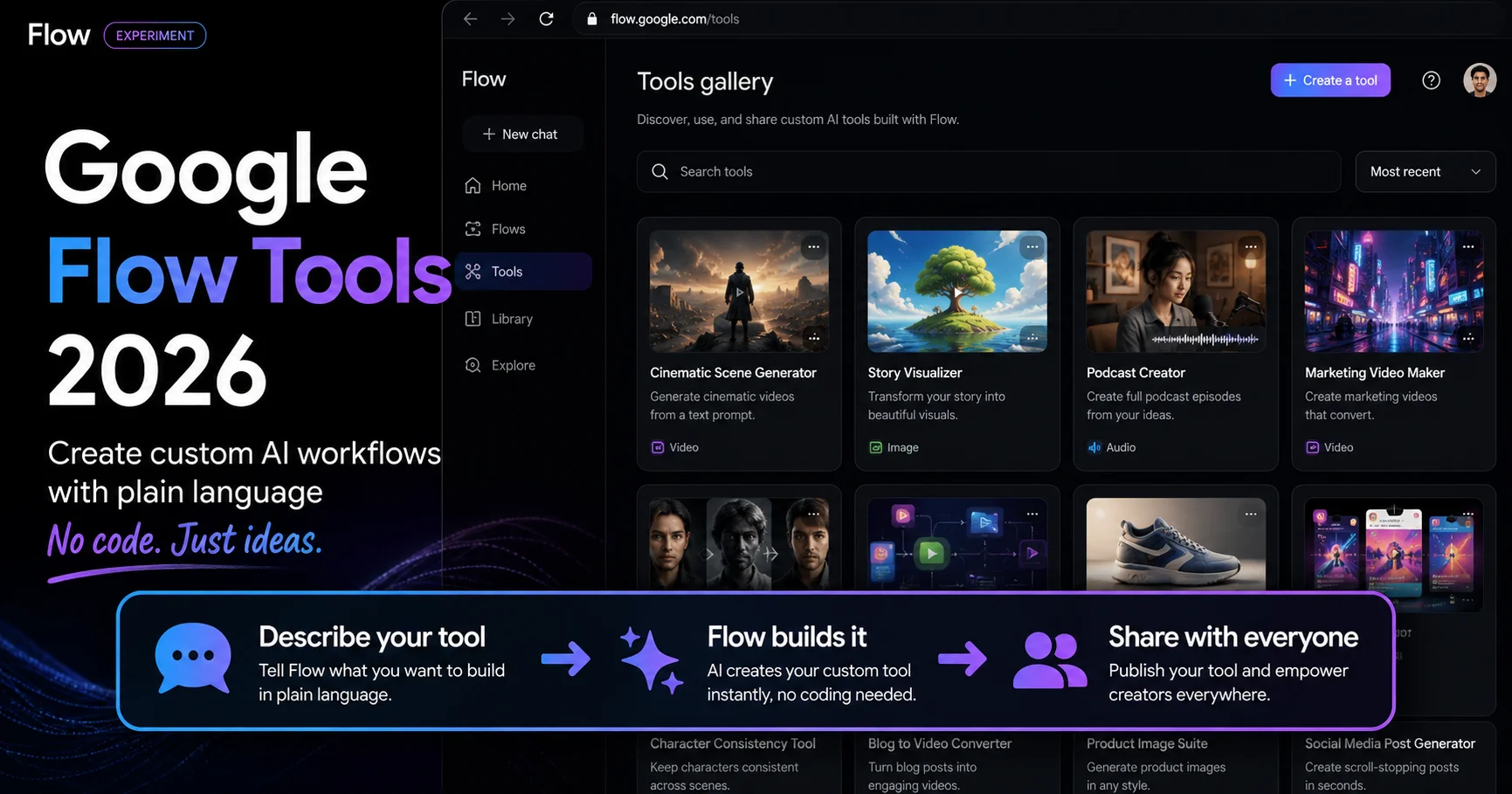
Veo 3.1 is Google DeepMind’s latest video generation model, available through Google Flow AI at flow.google.
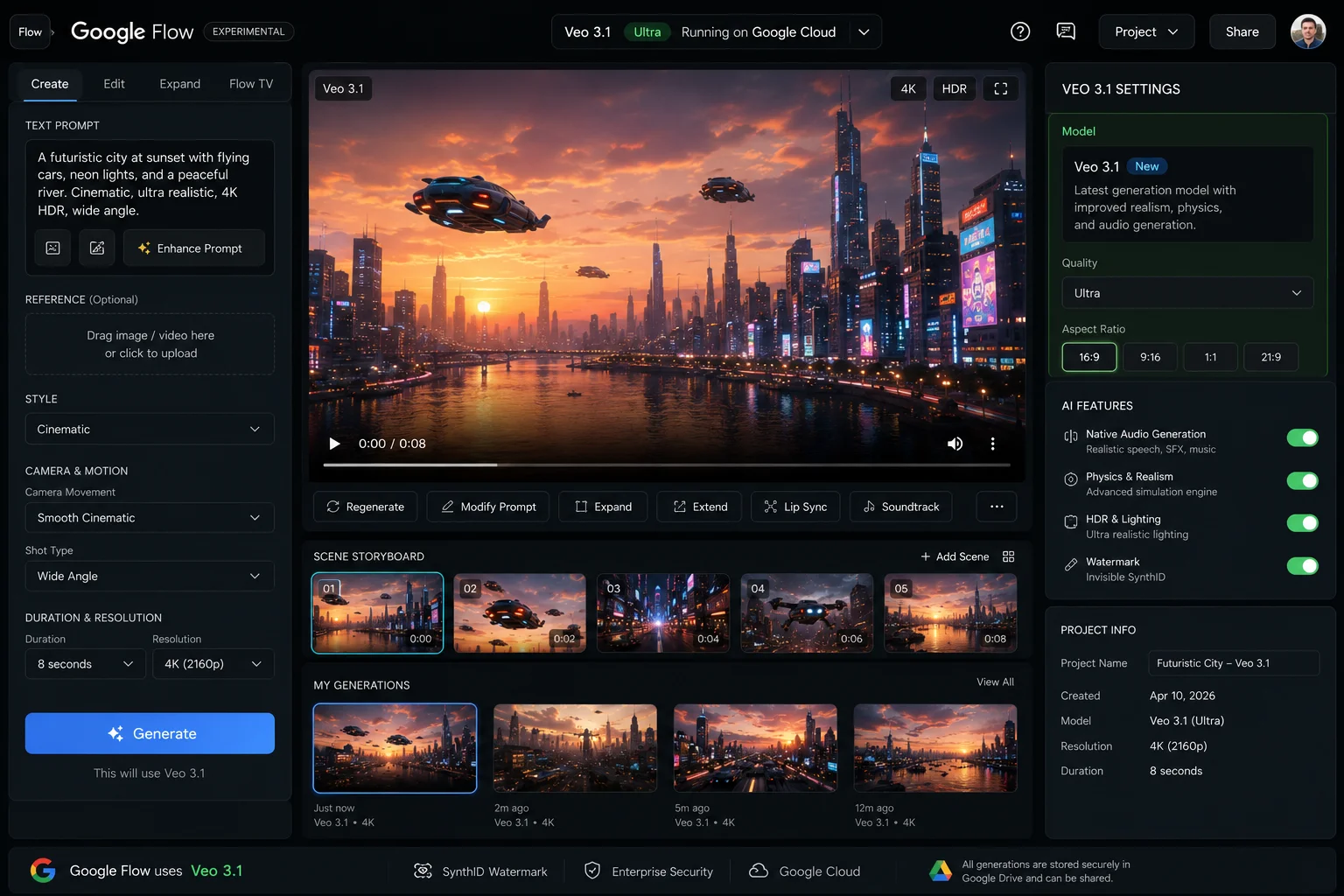
If you’ve been following along on WhiskAILabs, you already know about the Veo 3.1 update that brought major new capabilities in late 2025 and continued expanding in 2026. Here’s a quick refresh:
Built-in audio across all modes:
Veo 3.1 generates synchronized sound for every video generation mode inside Flow AI — text-to-video, image-to-video, Ingredients to Video, Extend, Scene Extension. Audio comes with the video, not after it.
Advanced editing tools:
Add an object to an existing clip, remove something you don’t want, extend scenes forward, define the first and last frame of a sequence. These tools let you refine generated content instead of starting over.
Cinematic quality at 1080p:
Consistent high-resolution output with real-world lighting behavior and detailed textures.
Character continuity via Ingredients:
Using the Ingredients to Video workflow, you can maintain the same character’s appearance across multiple generated clips by using a reference image each time.
API access for developers:
Key Veo 3.1 features are now available through the Gemini API and Vertex AI, meaning developers can build on top of them.
For the full deep-dive on everything Veo 3.1 added, read our complete Veo 3.1 update article.
Head-to-Head: Veo 3.1 vs Sora 2 — Feature by Feature
Now let’s compare them directly across the dimensions that actually matter for creators.
Video Quality and Visual Realism
Sora 2: Widely praised for its cinematic feel and visual consistency. The look was polished, smooth, and often described as the most “natural” output of any AI video model. Physics simulation — how objects move, fall, splash, and interact — was Sora 2’s standout strength. Independent reviewers consistently noted that Sora 2’s motion felt the most grounded in real-world physics.
Veo 3.1: Produces stunning, high-quality video with excellent detail, lighting, and texture. The look is more overtly cinematic — often described as having a “produced” quality that works brilliantly for commercial content, brand videos, and social media. Where it doesn’t quite match Sora 2 is in subtle physics complexity — very intricate fluid dynamics or multi-object collision physics can look slightly approximate in Veo 3.1.
The honest take:
For raw physical realism and natural-looking human movement, Sora 2 had a slight edge. For polished, cinematic production quality — the kind of visual output that works immediately in branded or commercial content — Veo 3.1 is excellent and arguably easier to make look professional with less effort.
Winner: Near tie. Sora 2 for physics realism; Veo 3.1 for cinematic production quality.
Audio Generation
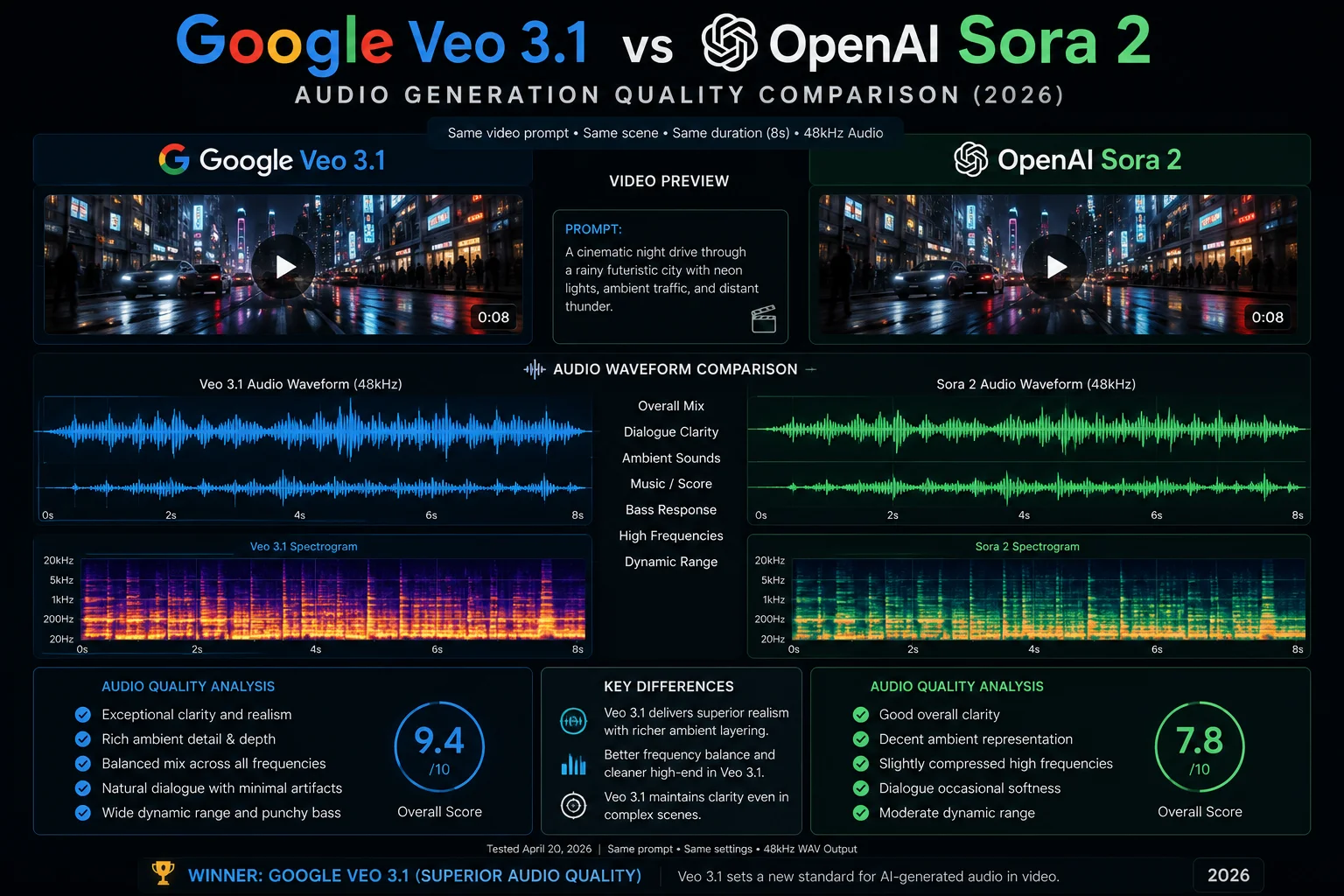
Sora 2: Had synchronized audio including dialogue, sound effects, and ambient noise. The quality was good and competitive with what Veo 3 produced.
Veo 3.1: Has audio across all generation modes — including Ingredients to Video, Frames to Video, and Extend. The audio is narrative-aware, meaning the AI reads the mood and visual content of each moment to generate appropriate sound rather than generic background noise. It’s also been expanded across more features than Sora 2 ever covered.
The honest take: Both handled synchronized audio well. Veo 3.1 has an advantage in breadth — audio works everywhere across all its modes. Sora 2’s audio was strong but didn’t cover as many generation scenarios.
Winner: Veo 3.1, on breadth and integration.
Video Length
Sora 2: Up to 25 seconds per clip. This was a genuine differentiator — Sora 2’s ability to generate a quarter-minute of video in one shot opened up storytelling possibilities that shorter tools couldn’t match.
Veo 3.1: Individual clips are typically 5-10 seconds. However, the Scene Extension feature lets you extend clips beyond their initial length, and Flow AI’s timeline lets you chain multiple clips together into longer sequences.
The honest take: Sora 2 wins on raw single-generation length. Veo 3.1’s workaround (chaining clips) works well but requires more steps and creative planning.
Winner: Sora 2 (on single-clip length). Veo 3.1 (on workflow flexibility for building longer pieces).
Editing and Creative Control
Sora 2: Offered a storyboard editor that let you define multiple scenes and generate them together. Remix and variation tools were available. But direct clip editing — adding objects, removing elements, targeting specific parts of a frame — was limited.
Veo 3.1: Dedicated editing tools include Add Object, Remove Object, Scene Extension, First and Last Frame control, and Extend. These let you make targeted changes to generated clips rather than starting from scratch every time you want something different.
The honest take: Veo 3.1 is meaningfully more flexible for post-generation editing. If you generate something and want to change one element, Veo 3.1 lets you do that. Sora 2 required more regeneration.
Winner: Veo 3.1, clearly.
Pricing
Sora 2 (when it was available):
- ChatGPT Plus: $20/month — access to Sora 2 with standard limits
- ChatGPT Pro: $200/month — higher usage limits, longer videos, priority access
Veo 3.1 (currently available):
- Free: Image generation only
- Google AI Plus: $19.99/month (~Rs. 1,400 in Pakistan) — full video access with Veo 3.1
- Google AI Ultra: Higher tier, highest quality and limits
The honest take: Pricing was almost identical at the base tier ($20 vs $19.99). Both required paid subscriptions for video. Sora 2’s Pro tier ($200/month) was significantly more expensive than Veo’s equivalent. The difference now is simple: only Veo 3.1 is available.
Winner: Veo 3.1 (it’s actually accessible).
Availability and Accessibility
Sora 2: Launched with US-first availability, then expanded. Required ChatGPT subscription. Mobile app was available. As of April 26, 2026 — no longer accessible.
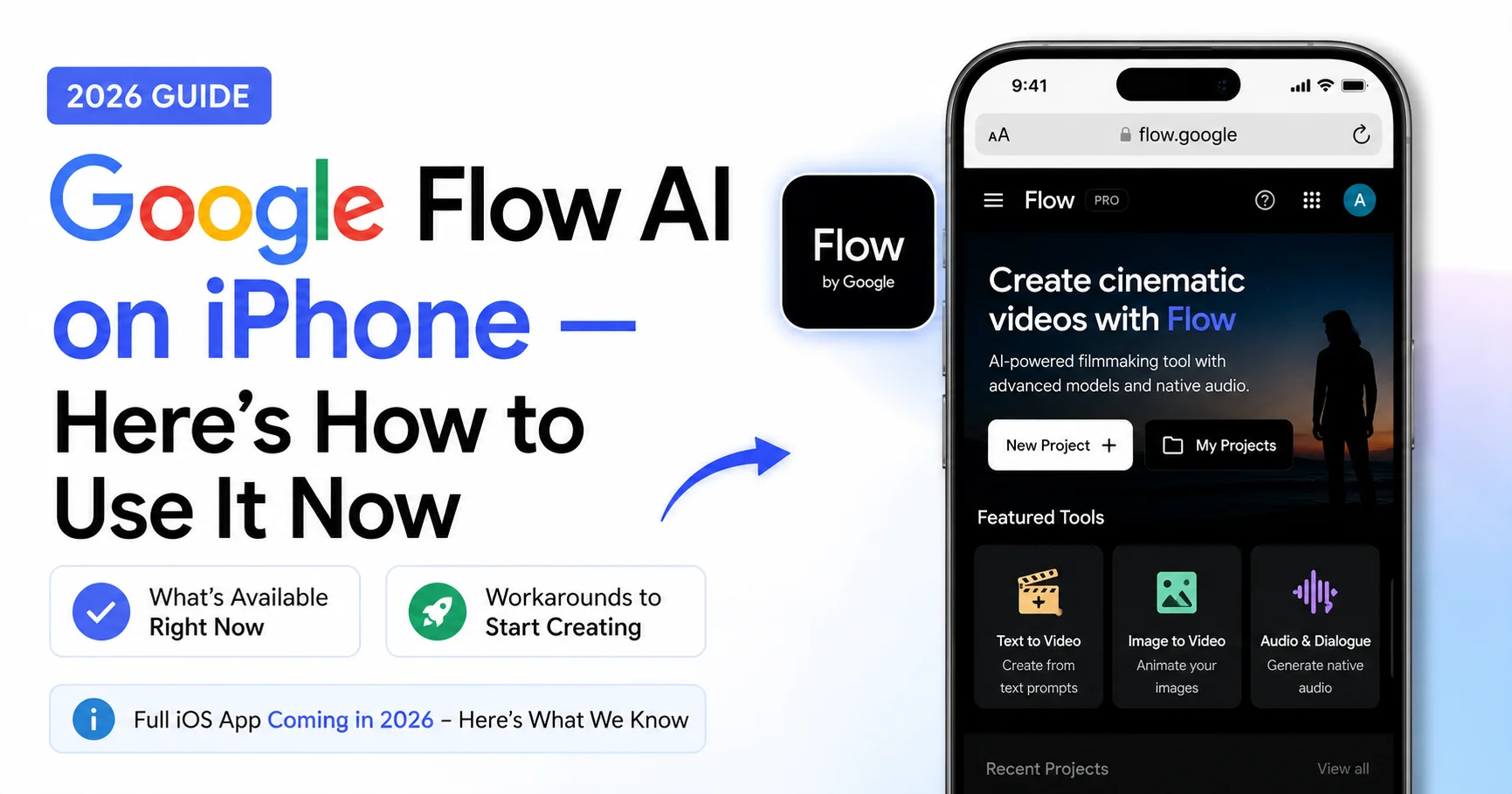
Veo 3.1: Available at flow.google to anyone with a Google account. Free tier available. Pakistani users can access it (see our Pakistan access guide). No mobile app yet, but web access works well on desktop.
The honest take: This isn’t even close anymore. Veo 3.1 exists. Sora 2 doesn’t.
Winner: Veo 3.1.
Developer API Access
Sora 2: Had a growing API ecosystem. The API will remain available until September 2026 before shutting down.
Veo 3.1: Available through the Gemini API and Vertex AI. Actively supported and expanding. Three major features (Ingredients to Video, First and Last Frame, Scene Extension) are now in the Gemini API, with more features rolling out.
Winner: Veo 3.1, with a longer future ahead.
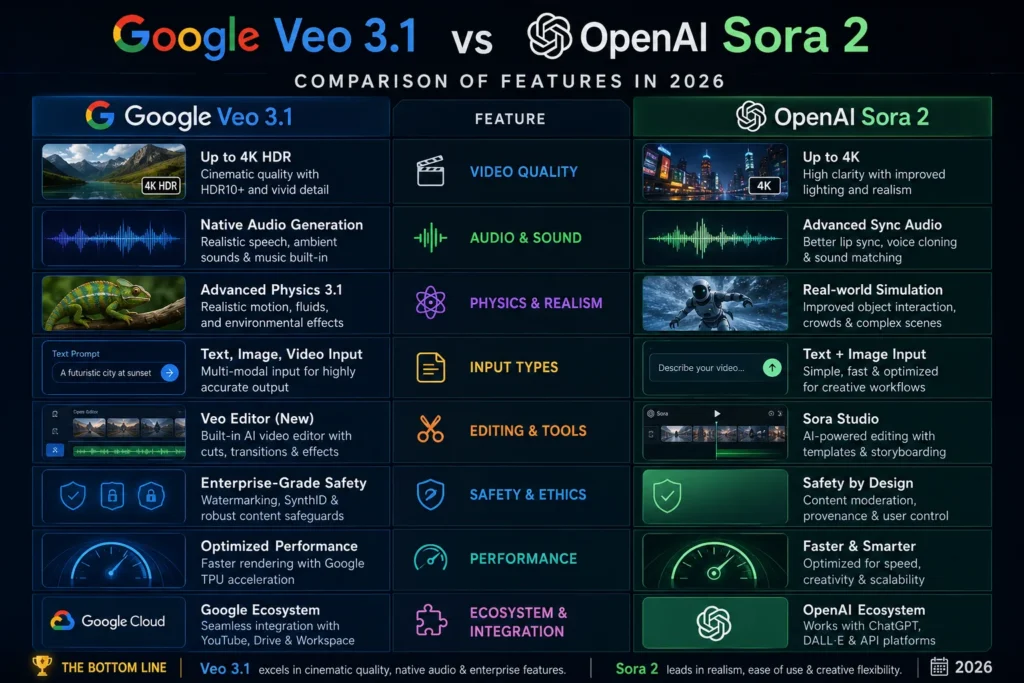
The Full Comparison Table
| Feature | Google Veo 3.1 | OpenAI Sora 2 |
|---|---|---|
| Currently available | ✅ Yes | ❌ Shut down April 26, 2026 |
| Video quality | ✅ Cinematic, polished | ✅ Natural, realistic |
| Physics realism | Good | ✅ Slightly better |
| Native audio | ✅ All modes | ✅ Yes |
| Max clip length | 5-10 sec (extendable) | ✅ Up to 25 seconds |
| Editing tools | ✅ Add/Remove object, Scene Extension, etc. | Limited |
| Character consistency | ✅ Via Ingredients | ✅ Good |
| Base pricing | $19.99/month | $20/month (no longer available) |
| Free tier | ✅ Images free | ❌ No free tier |
| Pakistan access | ✅ Yes (with VPN) | Was limited |
| Mobile app | ❌ Coming in 2026 | Had app (now shut down) |
| Developer API | ✅ Gemini API + Vertex AI | API ends Sept 2026 |
| Future updates | ✅ Active development | ❌ Discontinued |
So Who Won the Veo 3.1 vs Sora 2 Battle?
Here’s the straightforward answer: Google Veo 3.1 won — not because it was decisively better in every technical area, but because it’s still here.
That might sound like a diplomatic dodge, but it’s actually the most important truth in this comparison. Sora 2 had real strengths — its physics simulation was genuinely impressive, its 25-second clip length was a meaningful creative advantage, and its social publishing feature was something no competitor had. These were real wins.
But sustainable AI tools aren’t just about what they can do in a demo. They’re about economics, legal standing, and the ability to keep running. OpenAI’s Sora program ran into serious problems on both counts — the compute cost was enormous, and the legal situation around training data created ongoing friction with media companies. When those pressures became too great, the tool shut down.
Google, by contrast, has been methodical and deliberate with Veo. The model launched in limited access, expanded carefully, updated meaningfully with Veo 3.1, and is now actively growing its API ecosystem. It sits inside Google Flow AI — a platform that also includes Google Gemini, Imagen 4, Lyria 3 for music, and other tools — giving it a broader foundation than Sora ever had.
The result: if you were using Sora 2 and you need an alternative right now, Veo 3.1 is the answer. Not as a consolation prize — as a genuinely excellent tool with features Sora 2 never had.
For Creators Who Were Using Sora 2 — What Should You Do Now?
If Sora 2 was part of your workflow, here’s a practical path forward:
Start with Google Flow AI’s free tier.
Go to flow.google right now. You can generate images immediately at no cost. This gets you familiar with the interface before you commit to a paid subscription.
Read our Google Flow AI Tutorial. It walks you through every feature from scratch — including the Ingredients workflow, video generation, and the Veo 3.1 editing tools.
Rebuild your workflow around shorter clips + chaining.
The biggest adjustment from Sora 2 to Veo 3.1 is the clip length. Think in 5-8 second scenes instead of 25-second sequences, and use Flow’s timeline to build longer pieces by chaining clips together. It’s a different creative process but works well once you adapt.
Use the Ingredients workflow for character consistency.
If you were using Sora 2’s character consistency features, the Ingredients to Video workflow in Flow AI lets you maintain character appearance across clips using reference images.
Check our Whisk AI Not Working guide if you hit access issues.
It covers the most common problems for new Flow AI users including regional restrictions, browser issues, and account setup.
What About Other Alternatives to Sora 2?
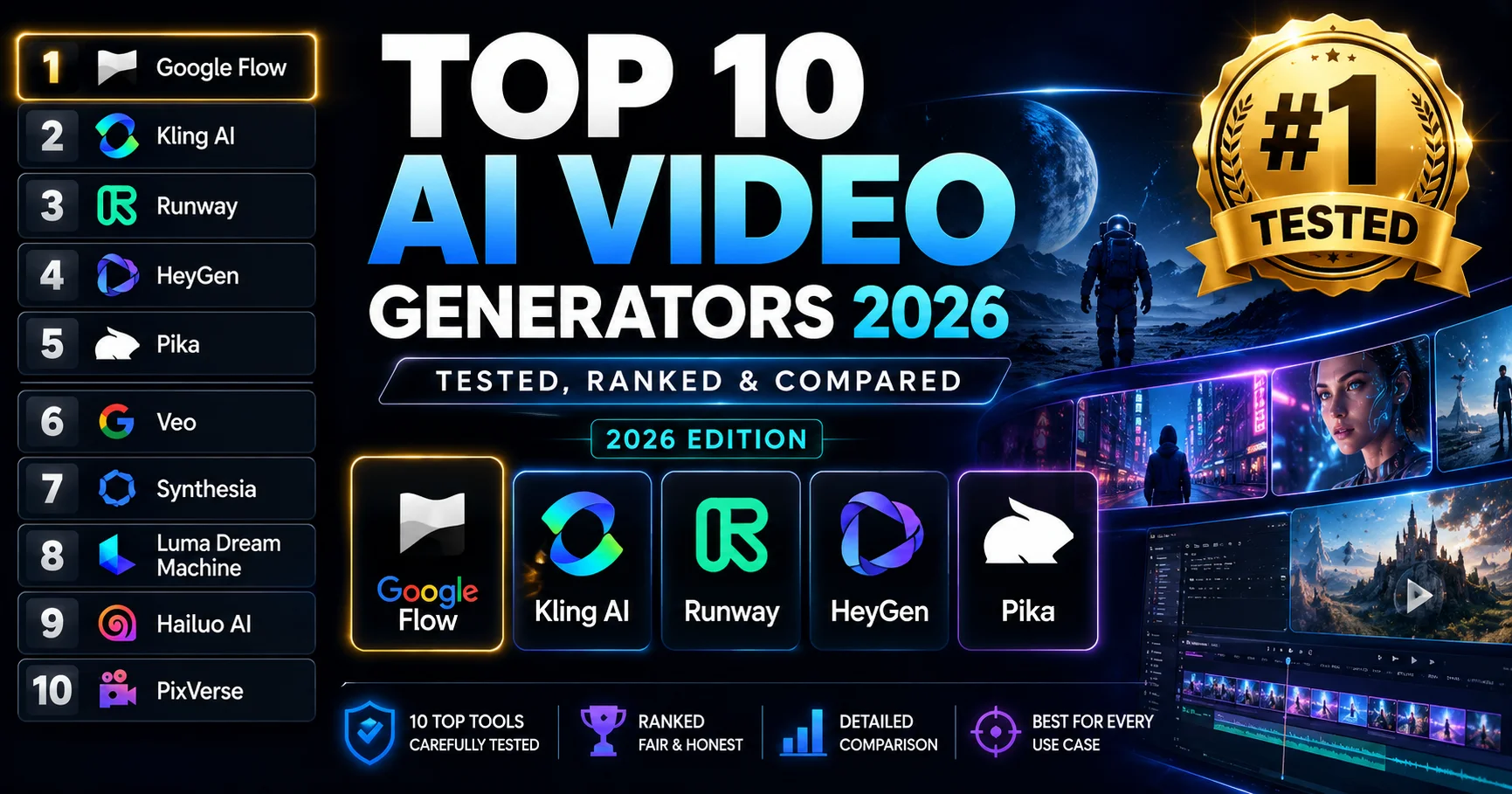
Veo 3.1 is the most direct replacement, but it’s worth knowing what else is out there:
Kling AI (by Kuaishou)
Released Kling 3.0 in February 2026 with native 4K output and a Multi-Shot Storyboard feature that lets you define and generate a whole sequence in one batch. Strong option for creators who need very high resolution output.
Runway ML
A more mature editing-focused platform with a longer history in professional video workflows. Better if you’re coming from a traditional video editing background and want tighter control over every parameter. Audio handling requires more manual work than Veo 3.1.
Seedance 2.0 (by ByteDance)
A technically impressive model with some of the best lip-sync accuracy available in 2026, particularly for non-English languages. Less accessible outside the Chinese market but growing internationally.
Google ImageFX
If you mainly need images rather than video, Google ImageFX is a free, excellent option that doesn’t require a subscription at all.
For a broader look at alternatives, our Whisk AI alternatives guide covers more options across different price points and use cases.
Real Talk: What Veo 3.1 Could Still Improve
Being honest here — Veo 3.1 is excellent but not perfect. A few areas where it still has room to grow:
Physics complexity — Detailed fluid simulation, complex multi-object collisions, and very nuanced physical interactions can look approximate. For most content this never matters, but for scientific visualization or highly realistic simulations, it’s a limitation.
Lip-sync in non-English languages — If you’re generating dialogue in Urdu, Arabic, or other non-English languages, the lip-sync accuracy isn’t as precise as English. This is a real gap for international creators.
Clip length — The 5-10 second limit per generation requires more planning and more clips to build longer content. For many creators this is fine; for some workflows it’s genuinely limiting.
No mobile app yet — Sora 2 had a mobile app. Veo 3.1 doesn’t yet, though one is expected later in 2026. Check our Google Flow AI Mobile App article for updates.
These are real gaps, not dealbreakers. And Google’s development pace suggests most of them will be addressed in coming updates.
Frequently Asked Questions
Q: Can I still use Sora 2 in 2026?
The Sora consumer app shut down on April 26, 2026. The Sora API is expected to remain available until September 24, 2026, for developers. After that, Sora 2 will be fully discontinued. For most users, it’s effectively gone now.
Q: Is Veo 3.1 better than Sora 2 overall?
It depends on what you were using Sora 2 for. On physics realism and single-clip length, Sora 2 had advantages. On editing tools, audio breadth, pricing, and ongoing availability, Veo 3.1 is better. Since Sora 2 is no longer available, Veo 3.1 is the practical answer for creators right now.
Q: Why did Sora 2 shut down?
OpenAI cited two main factors — the extremely high compute costs of running video generation at scale, and legal complications around the training data used for Sora 2, which had an opt-out (rather than opt-in) model for copyrighted material.
Q: How do I access Veo 3.1?
Go to flow.google and sign in with your Google account. Image generation is free. Video generation (Veo 3.1) requires Google AI Plus at $19.99/month. Read our complete Google Flow AI tutorial to get started.
Q: Is Veo 3.1 available in Pakistan?
Yes. Some regional restrictions may apply on first visit, but Pakistani users can access Google Flow AI. Our Pakistan access guide has the exact steps.
Q: What’s the best Sora 2 alternative right now?
Google Veo 3.1 (via Google Flow AI) is the most direct replacement. Kling AI 3.0 is also worth looking at for higher resolution output. Runway ML is better if you need a platform designed around professional video editing workflows.
Q: Will Veo 4 come out?
Google hasn’t announced a specific release date, but given the pace of Veo development (Veo 1 → Veo 2 → Veo 3 → Veo 3.1 within about 18 months), further updates are highly likely in 2026. We’ll cover them on our news and updates page as they happen.