Google Flow vs DALL-E 3 in 2026: Which AI Image Generator Should You Actually Use?
A Quick Warning Before You Read This
Something big happened between 2025 and now.
If you’ve been using AI image tools for a while — or you’ve been researching Google Flow vs DALL-E 3 — there’s one thing you absolutely need to know before anything else:
DALL-E 3 is officially being retired on May 12, 2026.
That’s not a rumor. OpenAI confirmed it. And if you’re using ChatGPT to generate images right now, you’ve already been switched over to GPT Image 1.5 — quietly, without a big announcement, back in December 2025.
Meanwhile, Google Flow has gone through one of the biggest upgrades in its short history. February 2026 brought a complete transformation — new models, a redesigned interface, and a full merge of Google’s creative tools into one place.
So this isn’t just another Google Flow vs DALL-E 3 comparison article. This is a 2026 reality check — with real facts, real updates, and a straight answer on which tool actually wins today.
Let’s break it all down properly.
What Is Google Flow in 2026? (It’s Not What It Was)
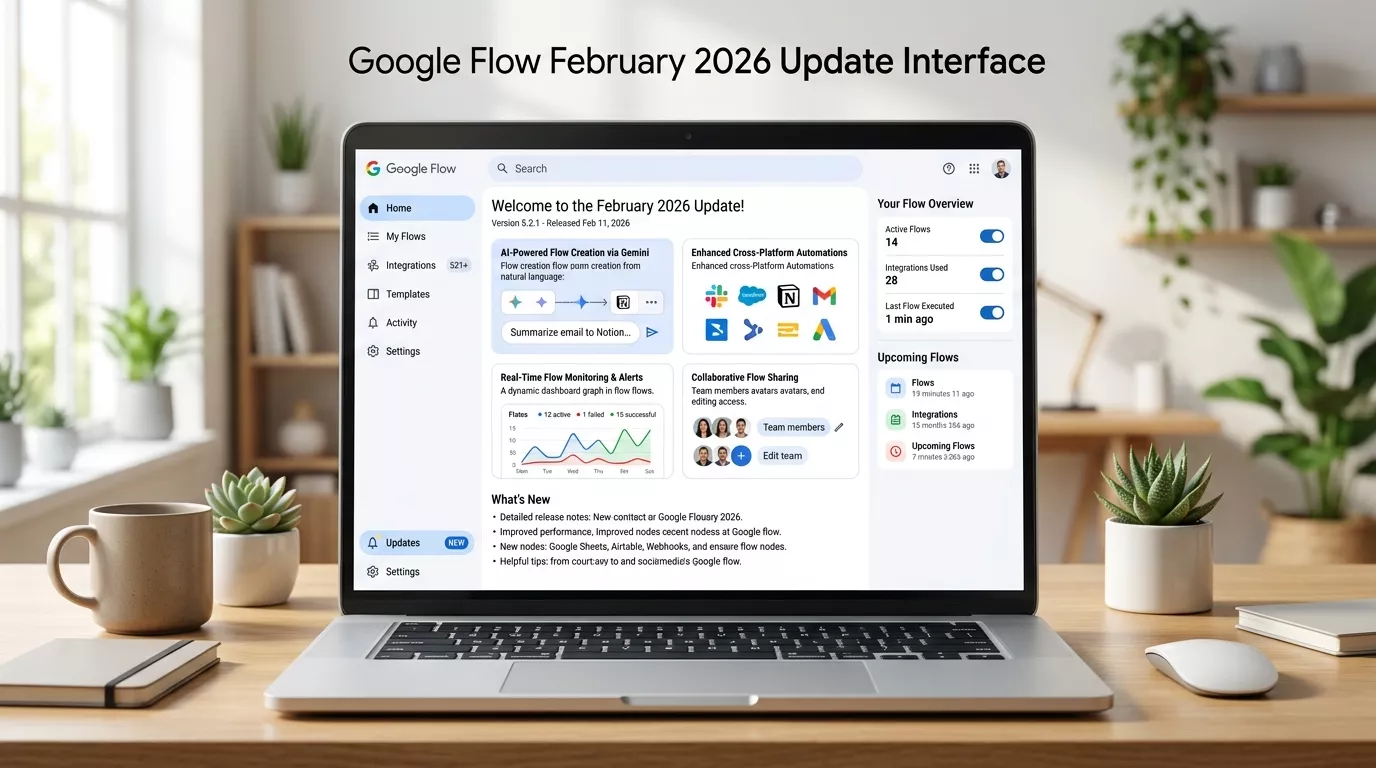
Before we go deeper into the Google Flow vs DALL-E 3 debate, you need to understand what Google Flow actually is today — because it has changed dramatically.
When Google first launched Flow in May 2025, it was already impressive — a creative studio powered by Veo and Imagen, built for visual storytelling.
But in February 2026, Google didn’t just update Flow. They rebuilt the experience entirely.
Here’s what changed:
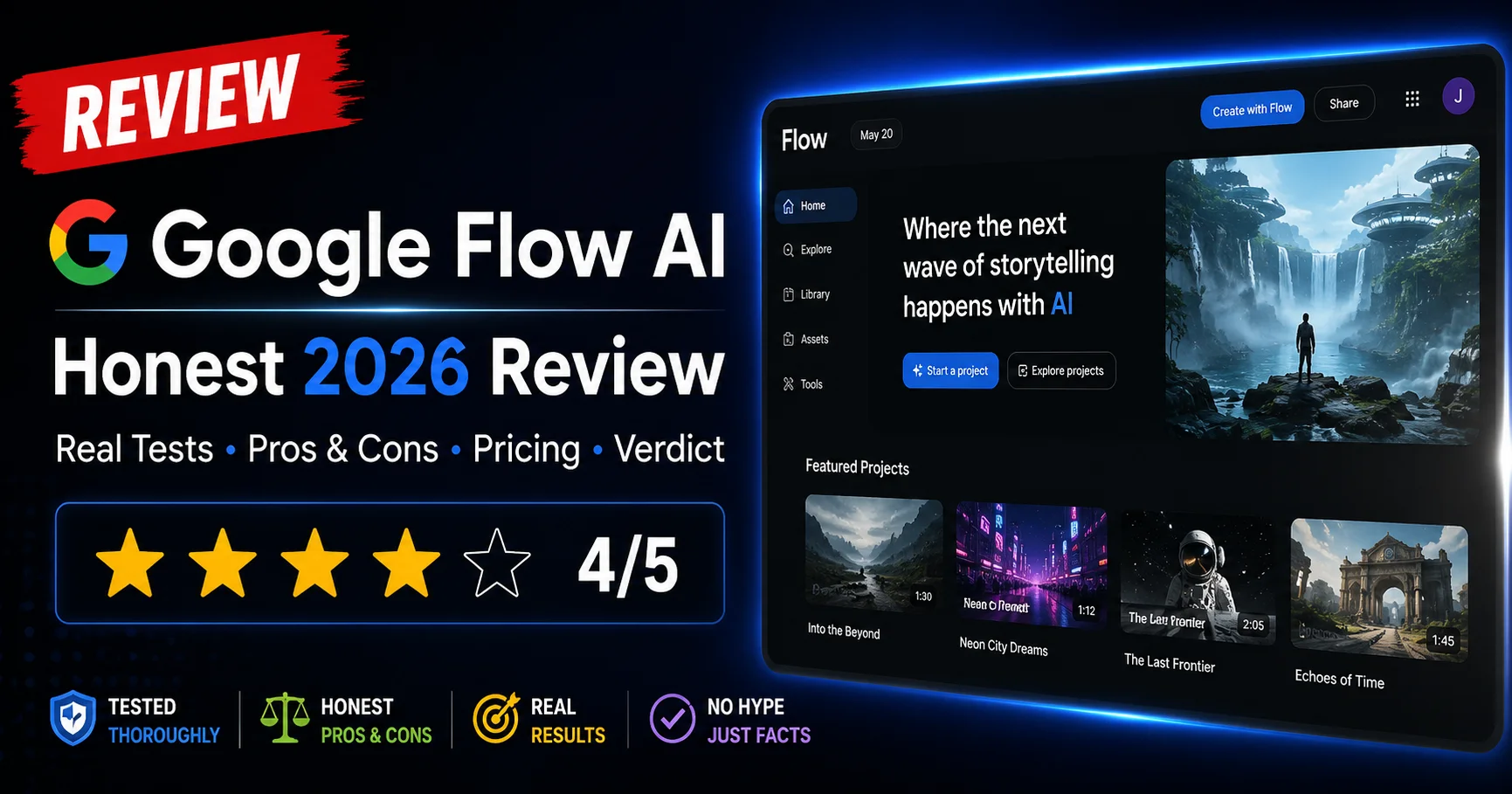
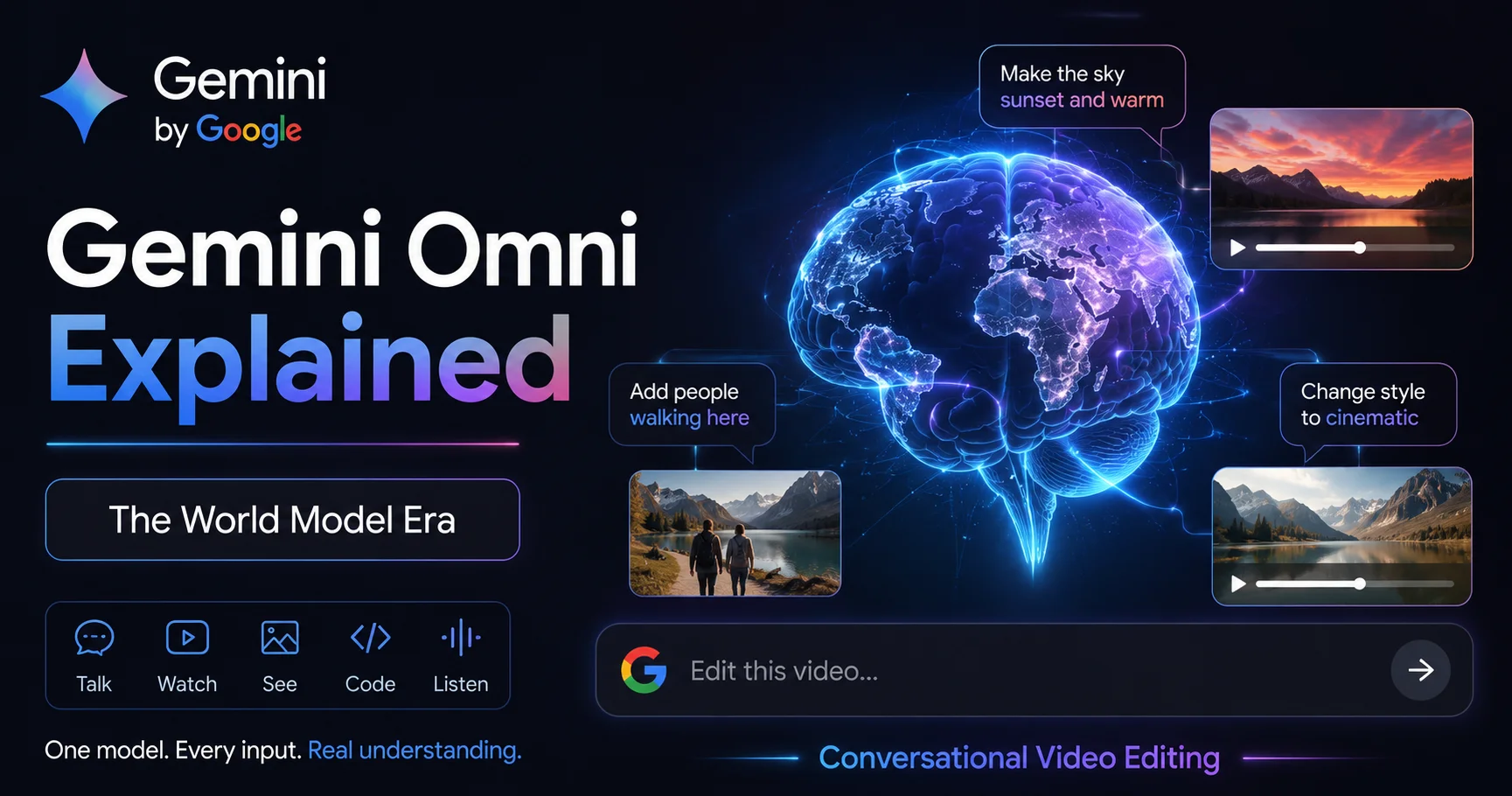
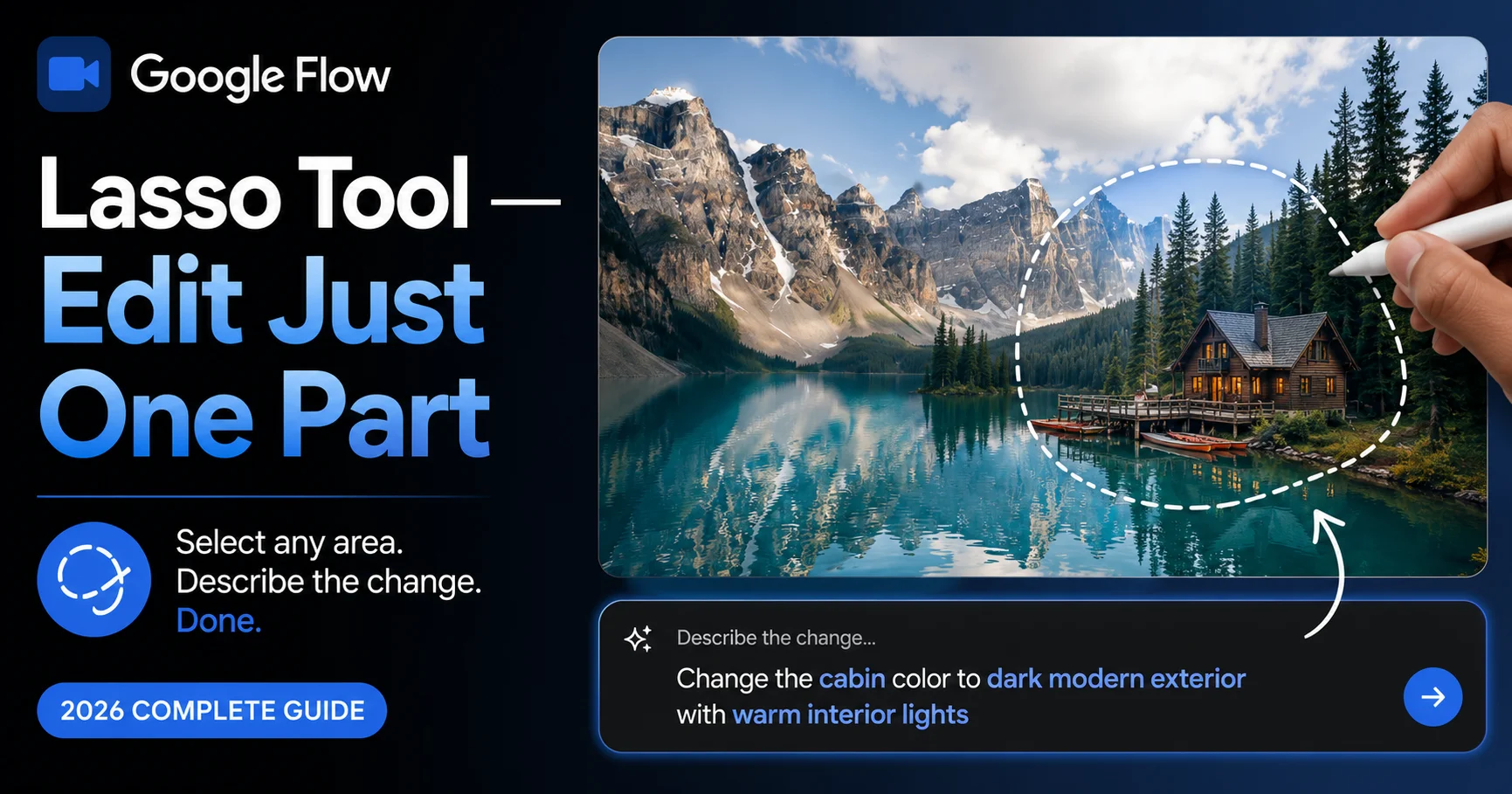
Google rolled out a redesigned interface with simplified upfront controls to make it easier to generate visuals and more flexible asset management. The company also added a simple lasso tool to precisely select an area of an image and use conversational prompts to request tweaks. Users can now generate high-resolution images and use them as elements within Veo video generations — all within the same workspace. Additionally, users can generate videos directly from photos using text commands.
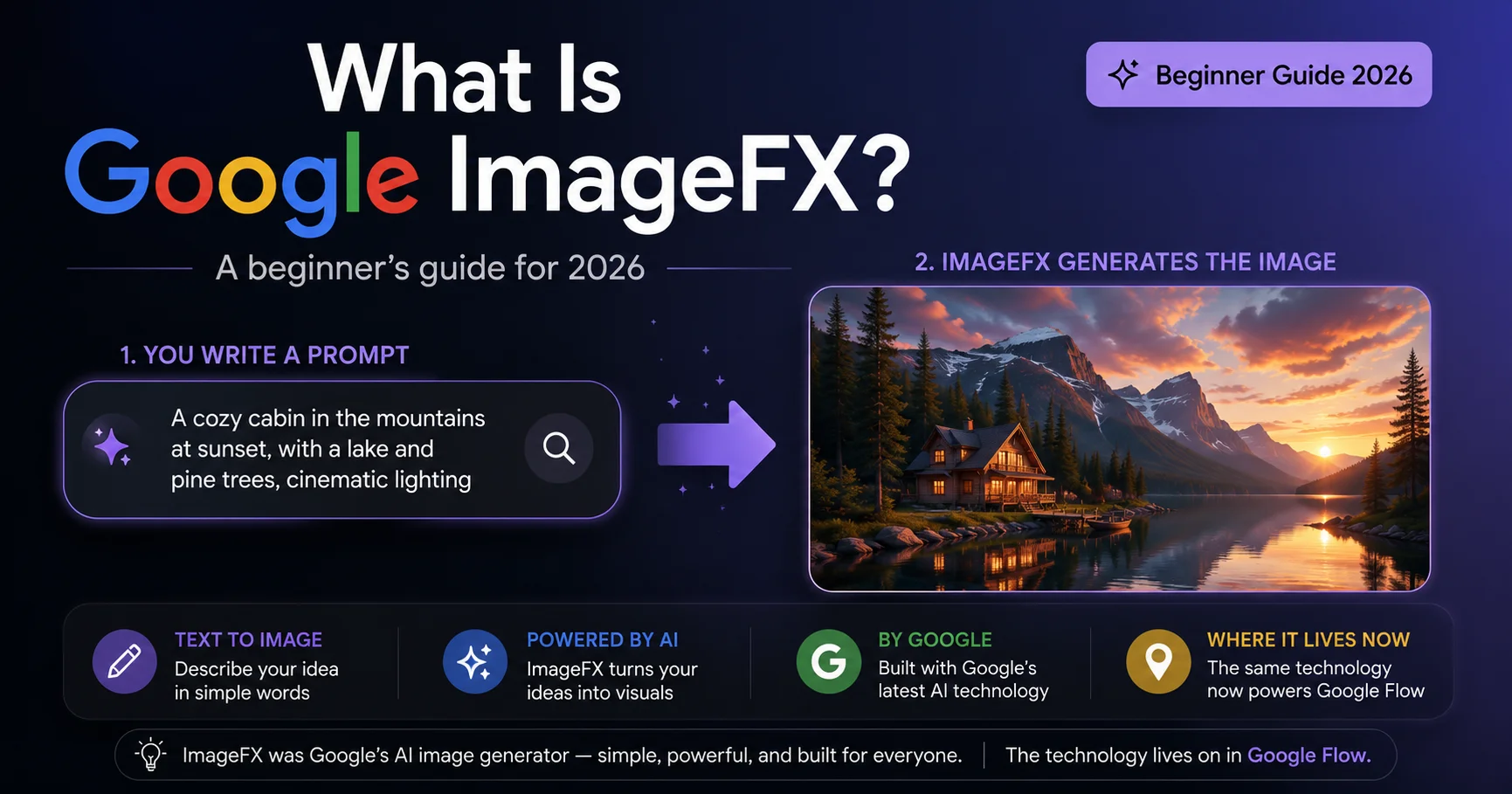
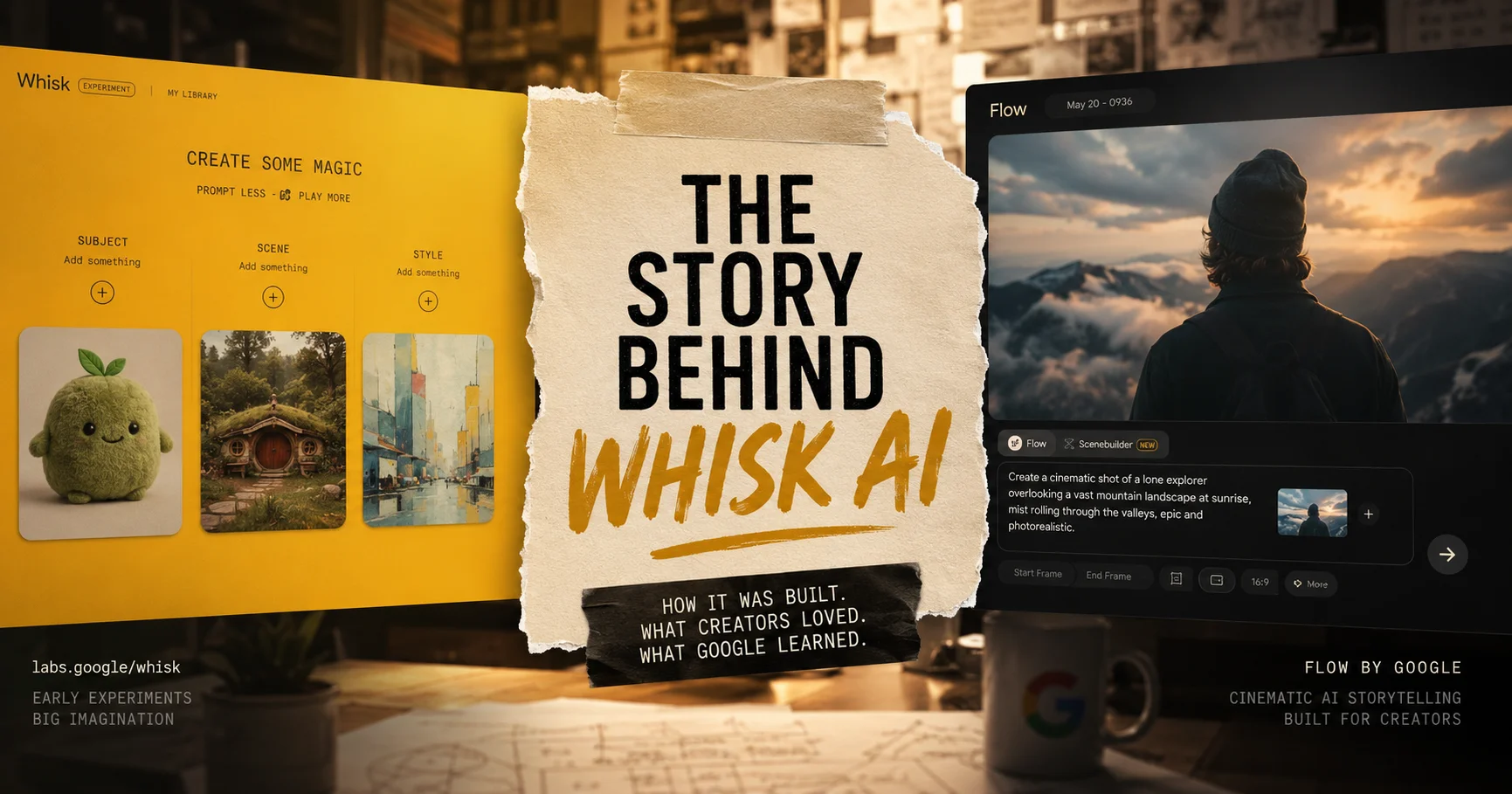
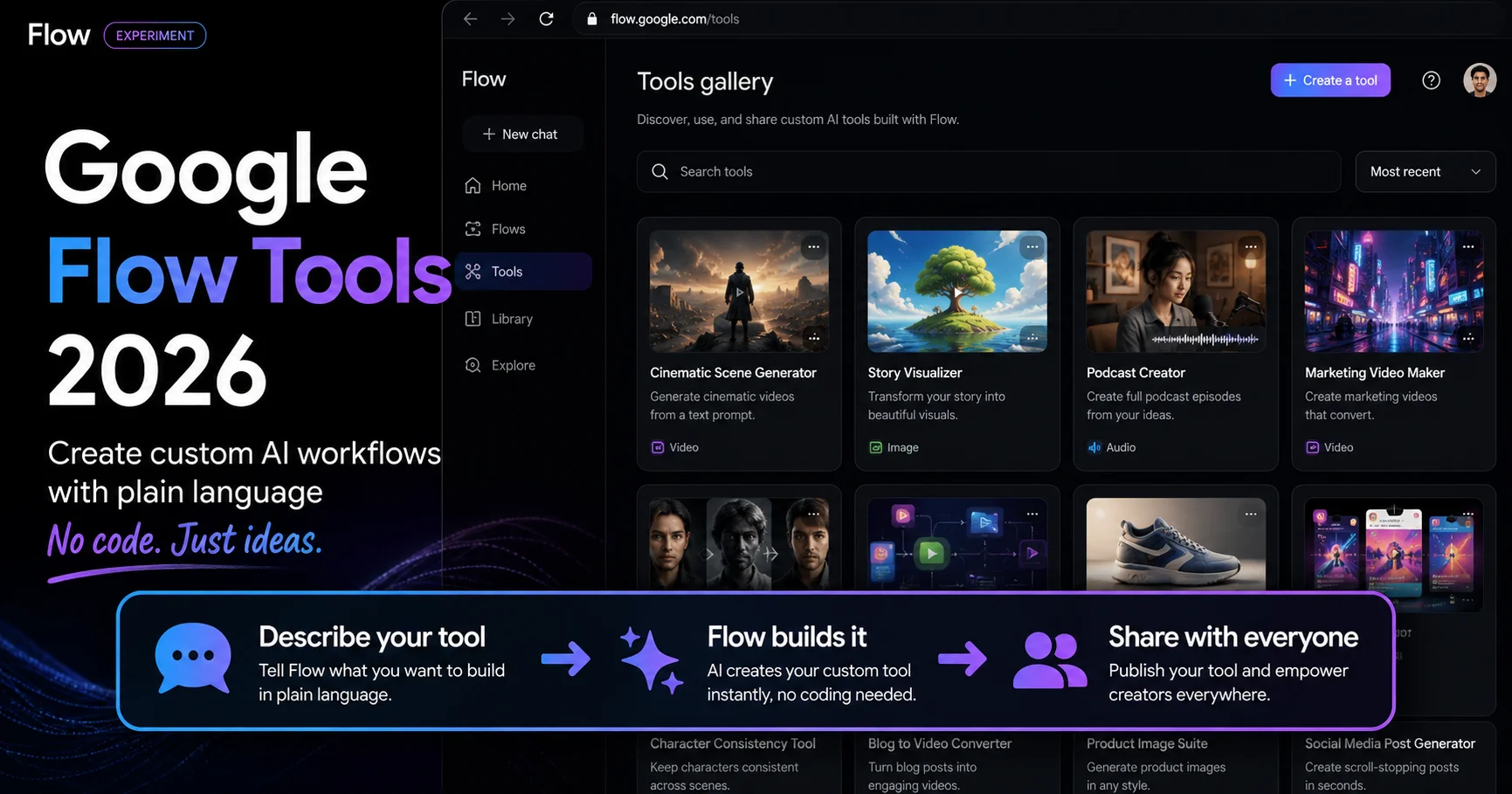
But the most important change? Two tools that used to exist separately — Whisk and ImageFX — are now part of Flow.
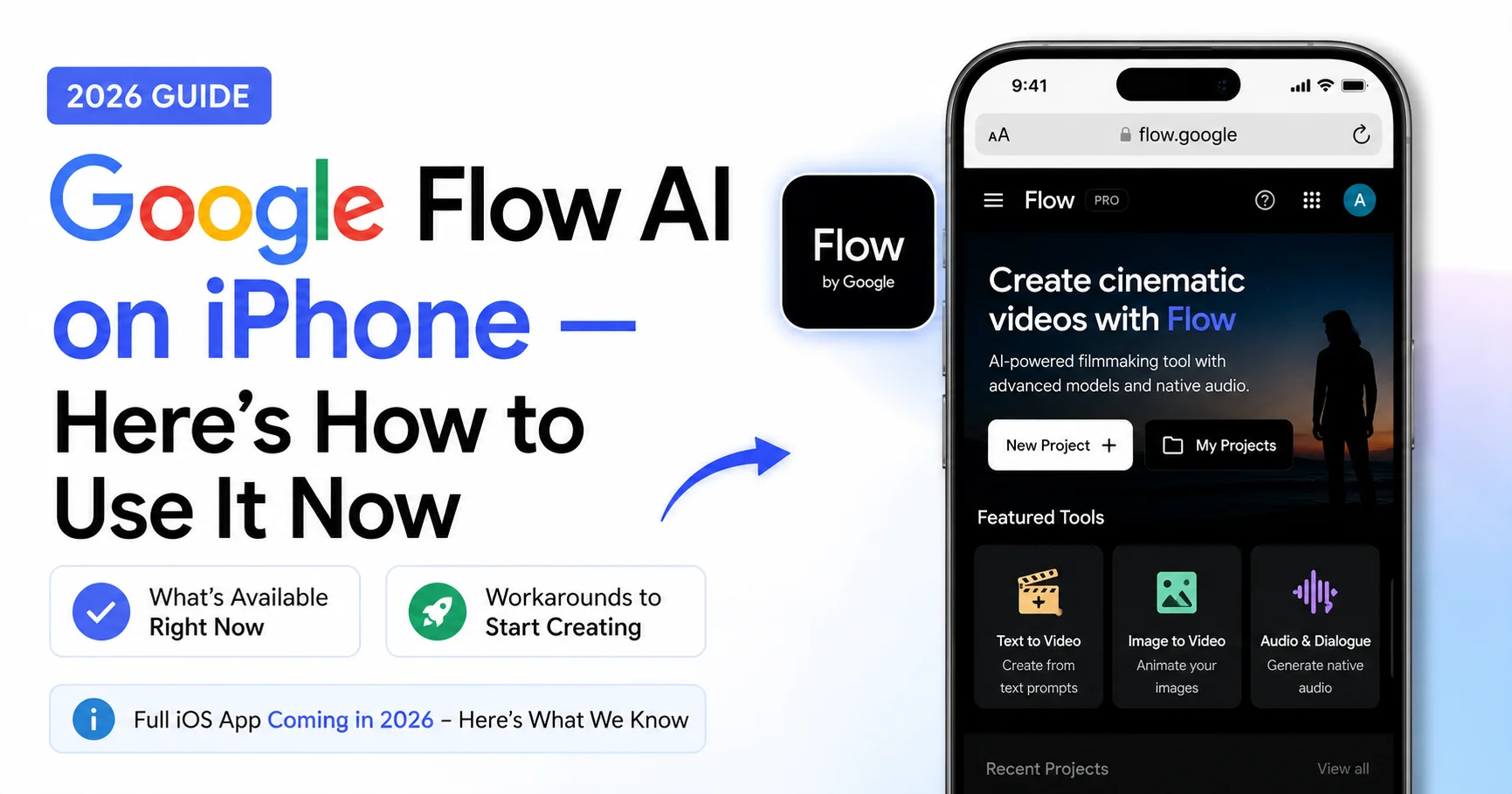
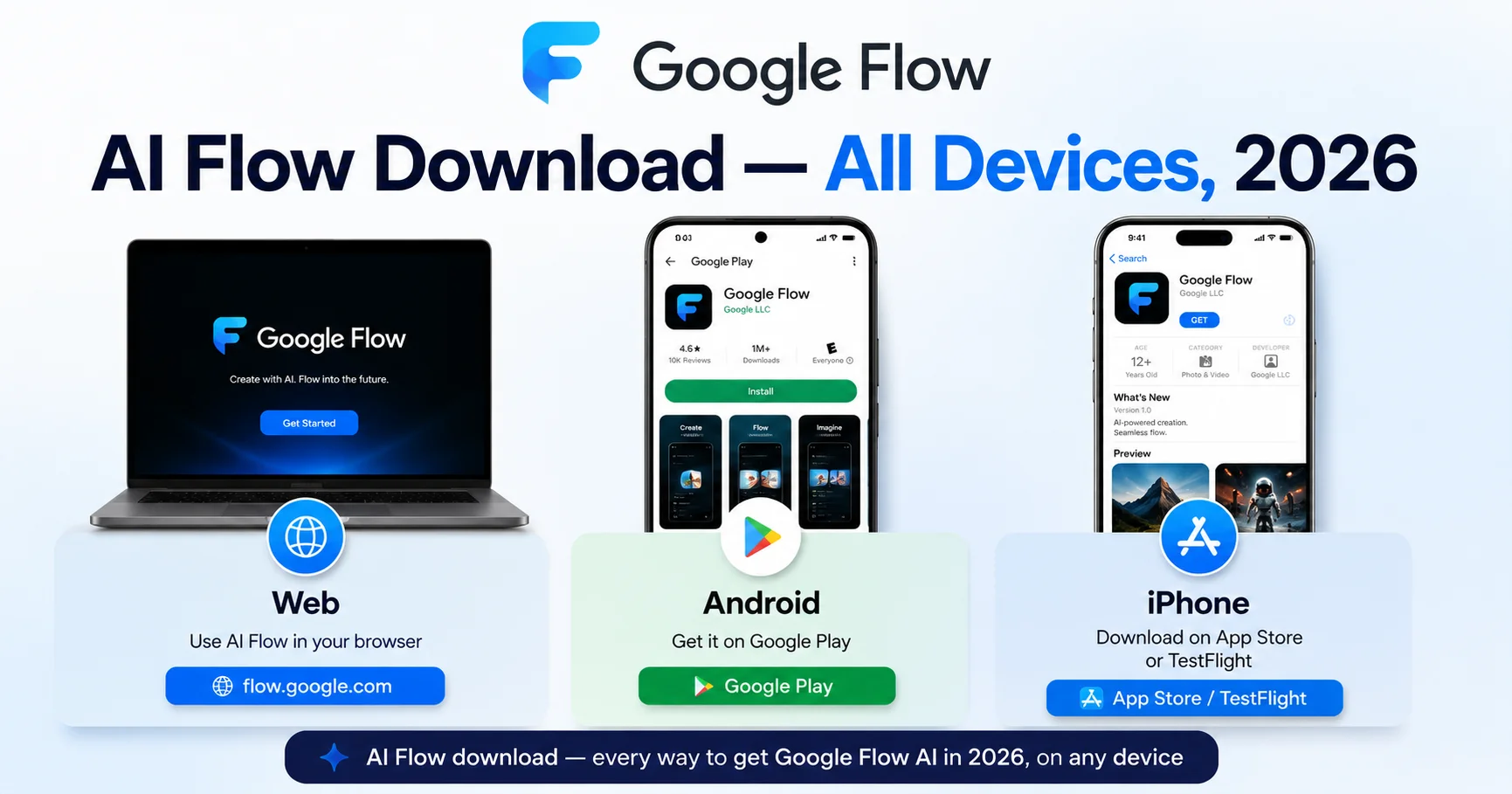
Google’s image generation experiments, Whisk and ImageFX, are now being integrated directly into Flow, and starting in March, users can transfer their existing projects and files. At the core is Google’s image model Nano Banana, which lets users generate images and use them directly as the basis for videos with Veo. Flow is available at flow.google and free to use after signing up — paying users get higher usage limits and access to the full set of tools.
And the results have been staggering. Since Flow launched last year, users have created over 1.5 billion images and videos for creative projects ranging from films to music videos to product campaigns.
What powers Google Flow in 2026:
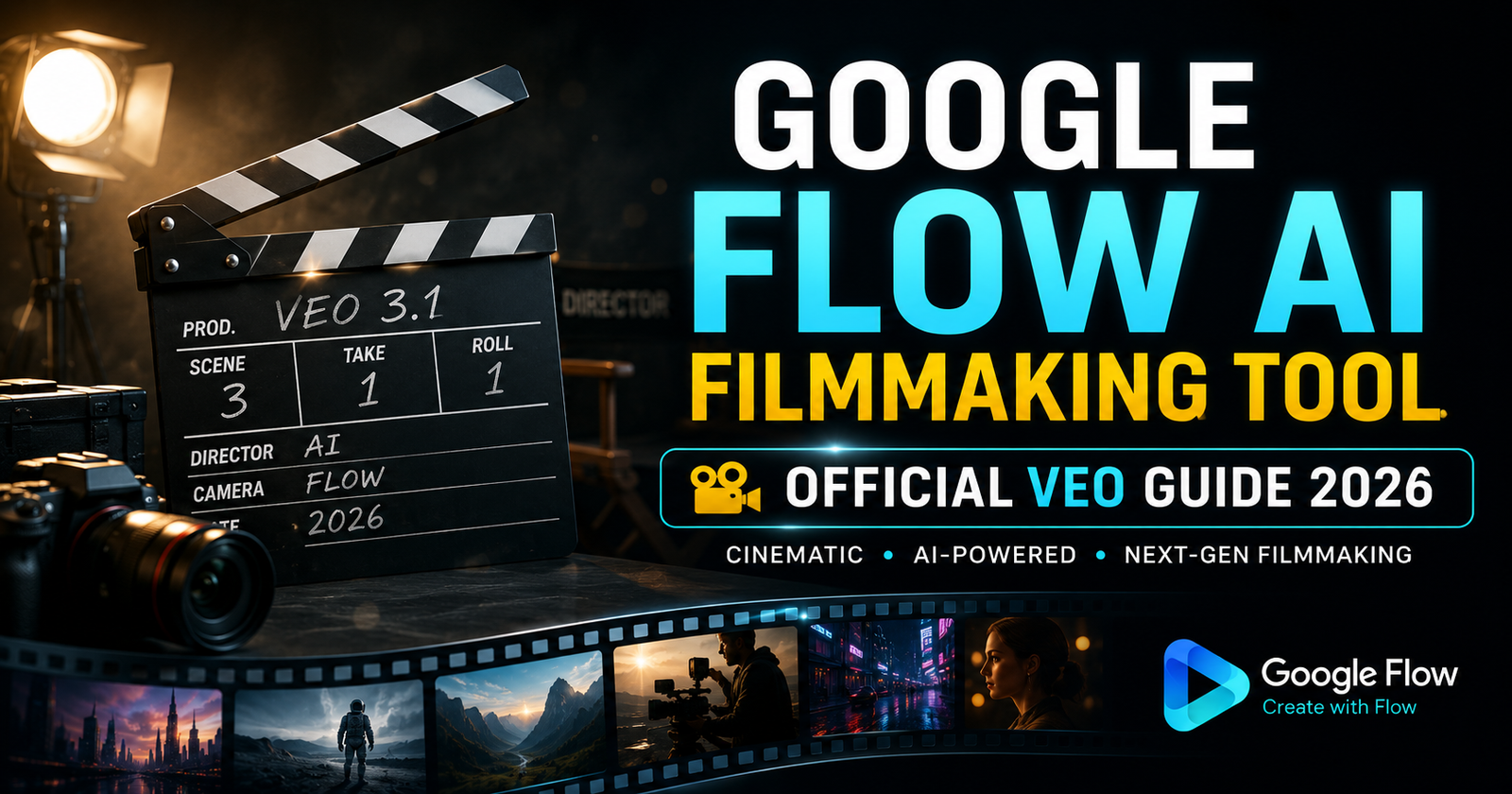
- Veo 3.1 — Google’s latest AI video generation model
- Nano Banana Pro — Google’s most advanced image generation model (for paid subscribers)
- Nano Banana — Available to free users alongside Imagen
- Gemini integration — For smarter, context-aware prompting
When accessed through Google Flow, Veo 3.1 allows users to generate intricate video sequences with multi-modal input. A user can provide a basic text prompt, upload up to three reference images — such as characters, scenes, or objects — or keyframe visuals to generate coherent, consistent visuals. Veo 3.1 generates a full video sequence with synchronized dialogues, background music, and sound effects. It also allows users to edit scenes in real-time, with features to insert and remove objects.
Google Flow is now available to:
- Google One AI Premium subscribers
- Google Workspace Business, Enterprise, and Education users (expanded January 2026)
- Free users with basic access at flow.google
Internal Link: Want to explore how Google’s AI creative tools fit into a modern content strategy? Check out our guide on AI Tools for Content Creators – WhiskaiLabs.
What Is DALL-E 3 in 2026? (The Honest Update)
Here’s where things get complicated — and where most comparison articles are getting it wrong.
DALL-E 3 is still technically available. But it’s on its way out.
OpenAI announced that DALL-E 3 will be deprecated on May 12, 2026, with GPT Image 1.5 serving as its replacement. The model has seen an 80% drop in relative usage share as newer image generation systems have emerged. DALL-E 3 was removed from ChatGPT without warning in December 2025, months before the official API deprecation date.
So if you open ChatGPT Plus today and ask it to generate an image, you’re no longer using DALL-E 3. You’re using GPT Image 1.5.
ChatGPT Plus subscribers will continue generating images after May 12; the underlying model will simply be GPT Image 1.5 instead of DALL-E 3, and early indications suggest quality improvements rather than regressions. For developer workflows using the DALL-E 3 API directly, the retirement requires a migration to GPT Image 1.5’s API endpoint.
What made DALL-E 3 so good (and what it was limited by):
DALL-E 3 was designed to work in close partnership with ChatGPT. It accepts natural language prompts and produces high-resolution images across a wide range of styles, including photorealism, illustration, oil painting, and pixel art. OpenAI released DALL-E 3 in late 2023, and it has since become a core component of OpenAI’s consumer and enterprise product suite.
DALL-E 3 now supports higher resolutions, with users able to request images up to 2K. The model also supports various aspect ratios and 360-degree panoramas — a major upgrade over earlier versions that were limited to square outputs.
Who still uses DALL-E 3 in 2026 (and why):
DALL-E 3 is accessible to over 100 million ChatGPT users globally via the Plus and Team plans. It remains one of the most widely accessible AI image tools available globally. OpenAI API pricing starts at $0.040 per image at standard quality for 1024×1024 resolution.
Despite being deprecated, DALL-E 3 still works perfectly through tools like Bing Image Creator (Microsoft Copilot), where it remains available alongside newer models. For casual users, it still delivers solid results.
But here’s the honest truth: If you’re starting fresh in 2026, building on DALL-E 3 directly doesn’t make strategic sense. The smarter conversation now is Google Flow vs GPT Image 1.5 — but since most people are still searching for the original comparison, this article gives you both pictures.
Internal Link: Confused about which AI generation tool is right for your business right now? Read our breakdown at Choosing the Right AI Tool for Your Business – WhiskaiLabs.
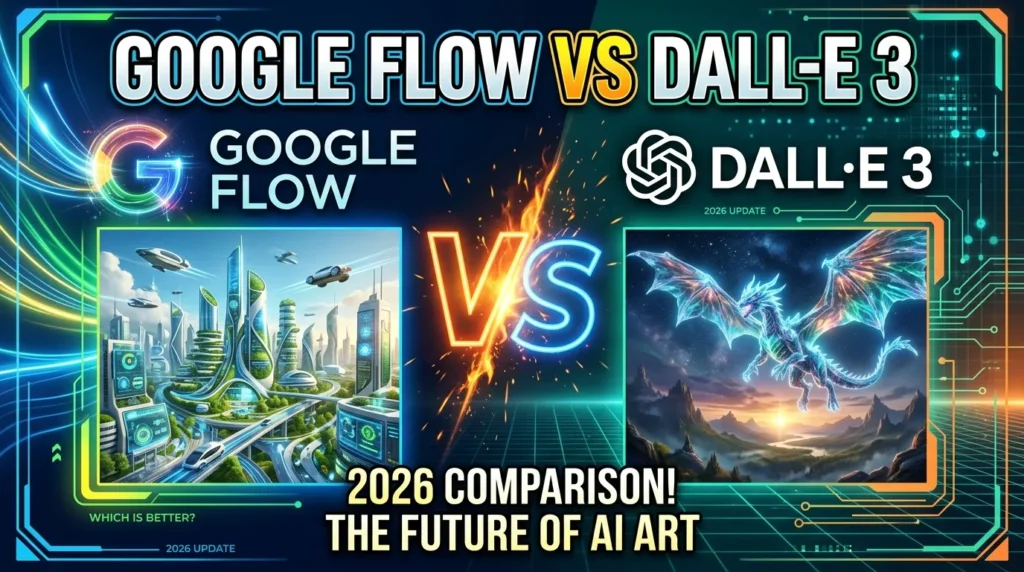
Google Flow vs DALL-E 3: Full Head-to-Head (2026 Edition)
Let’s get into the actual comparison — updated with everything we know as of mid-2026. This Google Flow vs DALL-E 3 breakdown covers every category that actually matters to real users.
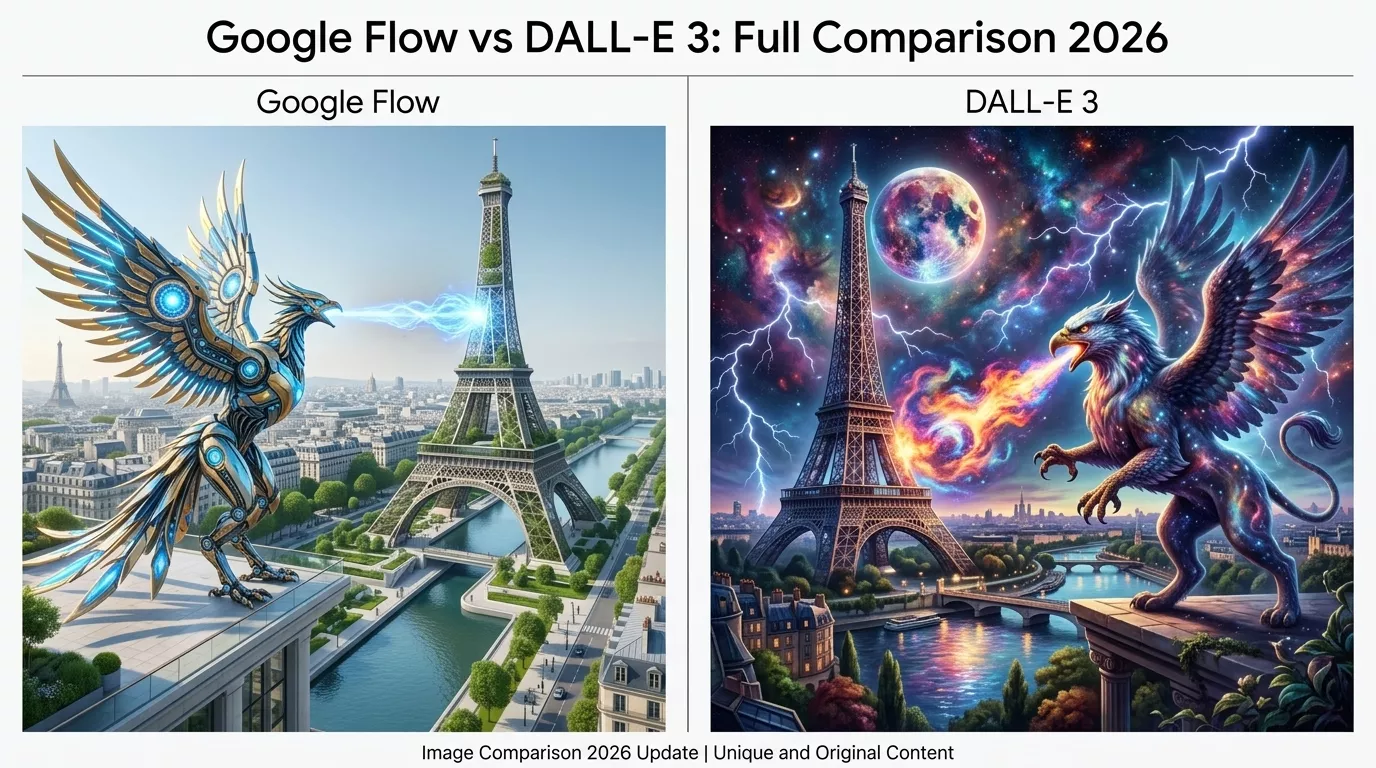
1. Image Quality: Which One Produces Better Results?
Google Flow (Nano Banana Pro) is now operating at a genuinely elite level.
Nano Banana Pro is Google’s newest state-of-the-art image model which provides improved professional-grade controls like depth of focus, lighting, and color grading. Simple prompts can be used to change a character’s outfit or pose and adjust the camera angle or lighting without re-rolling the entire scene.
This is a massive leap from even six months ago. Google Flow now lets you create photorealistic images with the kind of fine-tuned control that used to require professional photo editing software.
DALL-E 3, even in its current form, still holds up surprisingly well for general use.
DALL-E 3 is one of the most prompt-accurate AI image generators available in 2026. It excels at interpreting complex, detailed instructions and integrates natively with ChatGPT. It is best suited for writers, marketers, and product teams who need fast, reliable visuals without a steep learning curve.
Winner for photorealism and pro-level control: Google Flow (Nano Banana Pro) Winner for quick, reliable, everyday image needs: DALL-E 3 (or GPT Image 1.5)
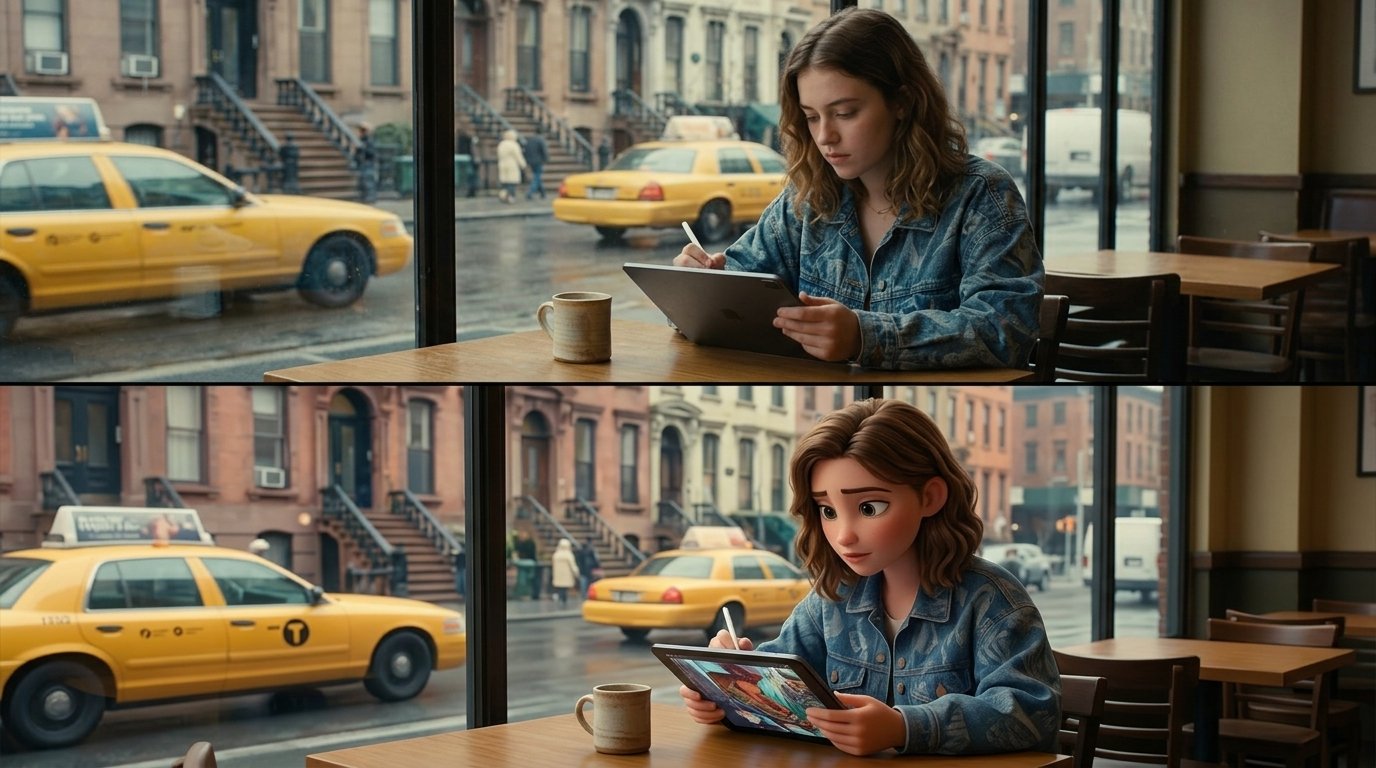
2. Video Generation: One Tool Has It, One Doesn’t
This isn’t even a contest in 2026.
Veo 3.1 generates a full video sequence with synchronized dialogues, background music, and sound effects. It allows users to edit scenes in real-time, with features to insert and remove objects, giving access to professional-grade video editing.
Google Flow is now a complete video production studio in your browser. You can go from a text idea to a cinematic short film — with music and voiceover — inside a single tool.
DALL-E 3 generates still images only. Full stop.
Winner for video: Google Flow (by a massive margin — DALL-E 3 doesn’t do video at all)
External Link: See Google’s full Veo 3.1 capabilities at Google DeepMind’s official site.
3. Ease of Use: Who Is More Beginner-Friendly?
Both tools have gotten easier. But they serve slightly different user types.
DALL-E 3 (via ChatGPT) remains the simplest path for anyone who’s never used an AI image tool before. You open a chat, you type what you want, you get an image. No setup. No learning curve. No separate platform.
By 2026, DALL-E 3 uses advanced natural language processing that grasps subtle meanings, links ideas across context, while catching tone on purpose. It has shifted into a system that works more like a partner than software sitting idle.
Google Flow’s February 2026 redesign specifically targeted ease of use. Google rolled out a redesigned interface featuring simplified upfront controls to make it easier to generate visuals, as well as more flexible asset management.
The lasso tool, the conversational editing system, the drag-and-drop asset management — all of it has made Flow significantly more approachable than it was even in late 2025.
Winner for pure beginners: DALL-E 3 (ChatGPT access is still the zero-friction path) Winner for structured creative workflow: Google Flow (especially with the redesigned UI)
4. Prompt Understanding: Who Listens Better?
DALL-E 3 was literally built around this. Its core architecture pairs text understanding with image generation in a way that feels conversational rather than technical.
DALL-E 3’s outstanding prompt accuracy allows it to follow complex, multi-part instructions better than almost any competing model in 2026. The seamless ChatGPT integration removes the need for prompt engineering expertise.
Google Flow has improved significantly with Nano Banana Pro. But its strength is less about literal prompt accuracy and more about mood, scene context, and visual narrative. It understands what a scene should feel like, not just what it should contain.
You can use simple prompts to change a character’s outfit, remove a distracting object from the background, or alter a pose, camera angle, or lighting without re-rolling the entire scene.
Winner for precise prompt following: DALL-E 3 Winner for mood and cinematic scene understanding: Google Flow
5. New Editing Features in 2026: Google Flow Pulls Ahead
This is where the 2026 update has genuinely changed the game for Google Flow.
New features include a lasso tool for targeted editing of image areas using text input, flexible media management with collections, and tools for extending clips and controlling camera movements.
Users can keep the story going by generating what happens next in a clip. They can seamlessly add new elements to a scene using simple text prompts, clean up shots by instantly removing unwanted subjects or objects, and direct shots with precise camera movements like pans and zooms.
DALL-E 3 supports basic inpainting and regeneration via ChatGPT, but doesn’t offer the scene-level editing control that Flow now has built in.
Winner for editing and iteration tools: Google Flow (by a clear margin in 2026)
6. Pricing: What Do You Actually Pay?
Google Flow:
- Free tier — Basic access at flow.google, limited credits (50 free credits per day)
- Paid access — Via Google One AI Premium ($19.99/month), which also includes Gemini Advanced and other Google AI tools
- Enterprise — Available in Google Workspace Business, Enterprise, and Education plans
DALL-E 3:
- Free — Limited access via Bing Image Creator (Microsoft Copilot)
- ChatGPT Plus — $20/month, includes GPT Image 1.5 (now the default, not DALL-E 3)
- API — $0.040 per image at standard quality for 1024×1024 resolution for API users
External Link: Current OpenAI pricing at OpenAI’s pricing page. External Link: Google One plans at Google One’s official page.
Winner for budget users: DALL-E 3 (Bing Image Creator free tier is still functional) Winner for value if you’re a Google user: Google Flow (AI Premium bundle is genuinely strong)
7. The Deprecation Factor: What Happens After May 12, 2026?
This is the section that no other comparison article is addressing honestly.
DALL-E 3 will be deprecated from its API on May 12, 2026, with newer models like GPT Image 1 and GPT Image 1.5 recommended as replacements. Because of this transition, you can no longer access DALL-E 3 image generator online on ChatGPT.
For most everyday users, this change is invisible. Your ChatGPT image generation keeps working — it just runs on GPT Image 1.5 now. For developers who built workflows directly on the DALL-E 3 API, a migration is required.
For developer workflows using the DALL-E 3 API directly, the retirement requires a migration to GPT Image 1.5’s API endpoint. OpenAI has indicated that pricing and commercial rights will carry over at similar rates.
Practical takeaway: If someone tells you to “use DALL-E 3” in 2026 for a new project, what they really mean is “use OpenAI’s image generation” — which is now GPT Image 1.5. The experience is actually better than before.
External Link: OpenAI’s official developer migration guide at OpenAI API Docs.
8. Developer Access and API Flexibility
OpenAI (DALL-E 3 / GPT Image 1.5) remains the clear leader for developers. Full API documentation, massive community, tons of third-party libraries, and now with GPT Image 1.5 the outputs are cleaner and more consistent.
Google Flow is available via Vertex AI for enterprise developers, but individual API access for independent developers building apps is still more complex than OpenAI’s offering.
Winner for developers: OpenAI (DALL-E 3 / GPT Image 1.5)
2026 Comparison Table: Google Flow vs DALL-E 3
| Feature | Google Flow (2026) | DALL-E 3 (2026 Status) |
|---|---|---|
| Image Quality | ⭐⭐⭐⭐⭐ (Nano Banana Pro) | ⭐⭐⭐⭐ (Still solid) |
| Video Generation | ✅ Yes — Veo 3.1 with audio | ❌ No |
| Prompt Accuracy | ⭐⭐⭐⭐ | ⭐⭐⭐⭐⭐ |
| Editing Tools | ✅ Lasso, inpainting, camera control | Basic via ChatGPT |
| Ease of Use | ⭐⭐⭐⭐ (Redesigned UI) | ⭐⭐⭐⭐⭐ |
| Free Tier | ✅ Yes (50 credits/day) | ✅ Yes (Bing) |
| API Access | Vertex AI (Enterprise) | Full API |
| Current Status | 🟢 Active + Growing | 🟡 Deprecated May 12, 2026 |
| Best For | Cinematic, video, storytelling | Marketing, art, quick iterations |
| Monthly Cost | $19.99 (AI Premium) | $20 (ChatGPT Plus) |
Who Should Use What in 2026? (Real Scenarios)
Still not sure which side of the Google Flow vs DALL-E 3 debate you fall on? Let’s match the tool to your actual situation.
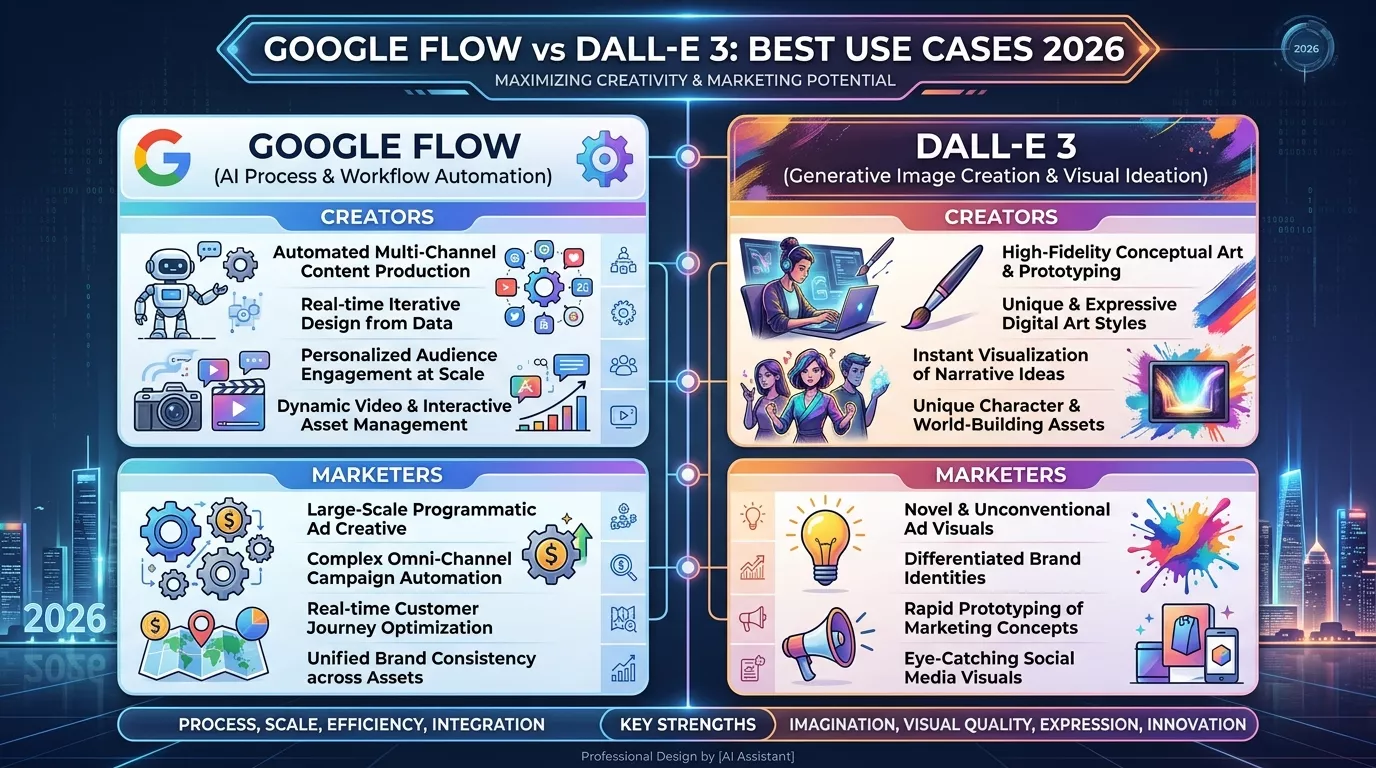
Choose Google Flow If You Are:
A filmmaker or video content creator who wants to go from idea to polished clip — with music, dialogue, and camera movements — inside one tool. Veo 3.1 is simply unmatched for this.
A brand or marketing team who needs product lifestyle photography, cinematic campaign visuals, or short video ads without hiring an entire production team.
A storyteller or educator building visual narratives — lesson videos, explainer content, short films, or social media stories.
Already in the Google ecosystem — if you’re paying for Google One AI Premium, Flow is already included. You might as well use it.
Choose DALL-E 3 (or GPT Image 1.5) If You Are:
A blogger, writer, or content marketer who needs quick, topic-relevant images while already using ChatGPT for writing. The same conversation, same tool — no switching.
A developer building image generation into a product or app. OpenAI’s API is simply cleaner and better documented for this use case.
A beginner with zero experience in AI tools. Open ChatGPT. Type what you want. Done.
An illustrator or designer who works in diverse styles — from watercolor to pixel art to architectural sketches. OpenAI’s model range for styles is still excellent.
Internal Link: Not sure where to start with AI tools for your website? Our full guide at WhiskaiLabs.net covers everything from beginner basics to advanced creative workflows.
Frequently Asked Questions (2026 Edition)
Here are the most common questions people ask when comparing Google Flow vs DALL-E 3 in 2026:
Is DALL-E 3 still available in 2026?
Technically yes, but barely. DALL-E 3 will be deprecated from its API on May 12, 2026. You can no longer access DALL-E 3 directly on ChatGPT — when generating images through the platform, you’re using the newer GPT Image 1.5 by default. DALL-E 3 still works through Bing Image Creator as of now.
What replaced DALL-E 3?
GPT Image 1.5 is OpenAI’s official replacement. GPT Image 1.5’s unified architecture offers better editing, faster generation, and improved consistency compared to DALL-E 3. For most users, the transition happened automatically — and the images actually look better.
Is Google Flow free in 2026?
Flow is available at flow.google and free to use after signing up — paying users get higher usage limits and access to the full set of tools. Free users get 50 credits per day. Paid subscribers (Google One AI Premium at $19.99/month) get higher limits and access to Nano Banana Pro.
Can Google Flow generate videos?
Yes — and this is one of its biggest strengths. Veo 3.1 allows users to generate video sequences with synchronized dialogues, background music, and sound effects, with features to insert and remove objects in real-time.
Which is better for professional use in 2026?
It depends on your definition of “professional.” For commercial video and cinematic production — Google Flow. For marketing image generation with reliable API access — OpenAI’s GPT Image 1.5 (which replaced DALL-E 3). Both are production-ready.
Does DALL-E 3 do videos?
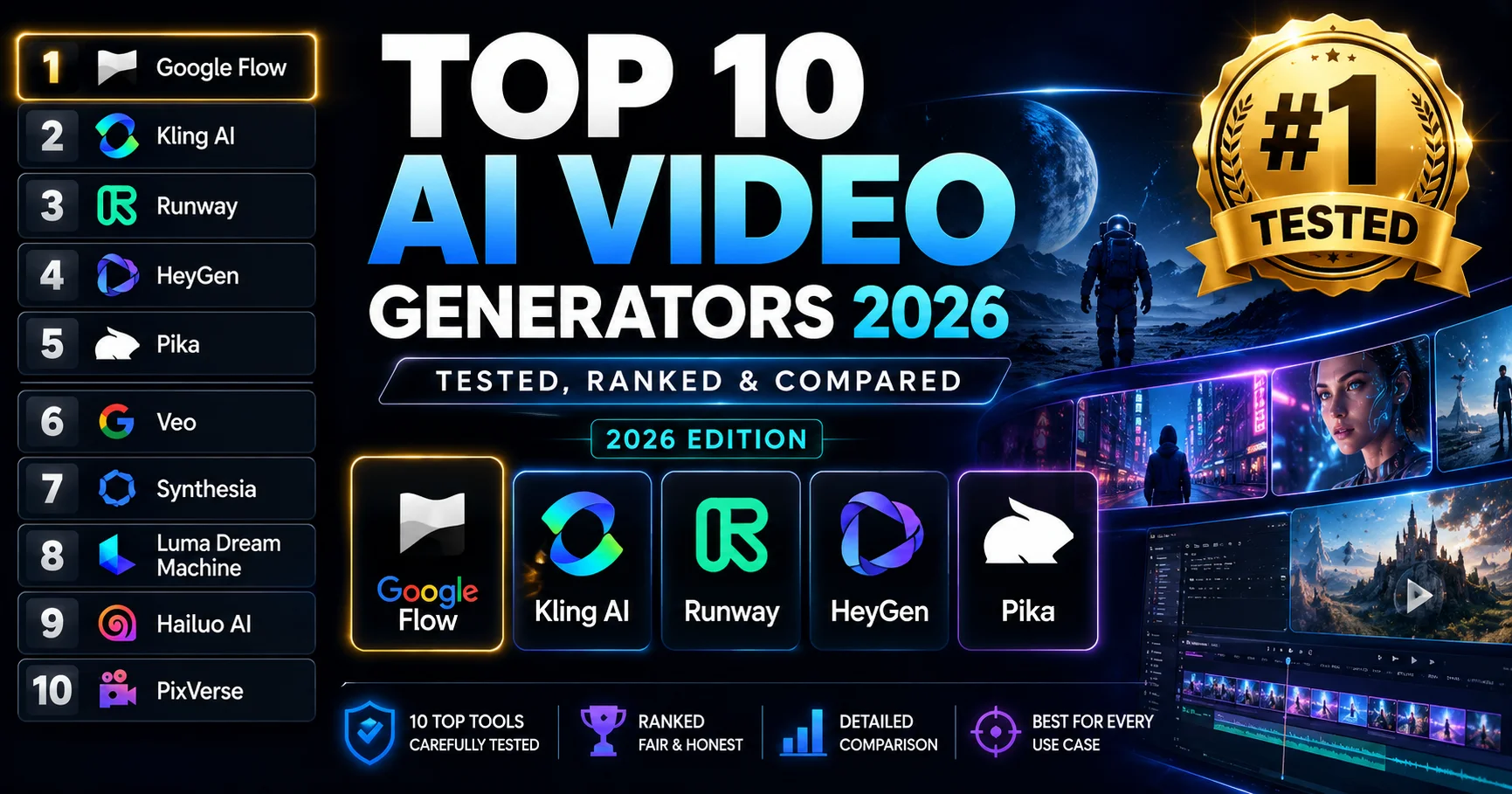
No. DALL-E 3 has always been images only, and that didn’t change before it was deprecated. If you need AI video, Google Flow (Veo 3.1), OpenAI’s Sora, or RunwayML are your options.
External Link: Learn more about AI video generation options at RunwayML and OpenAI Sora.
What the Broader AI Creative Market Looks Like in 2026
One more thing worth saying out loud: the Google Flow vs DALL-E 3 conversation is actually just one small part of a much bigger AI creative market shift happening right now.
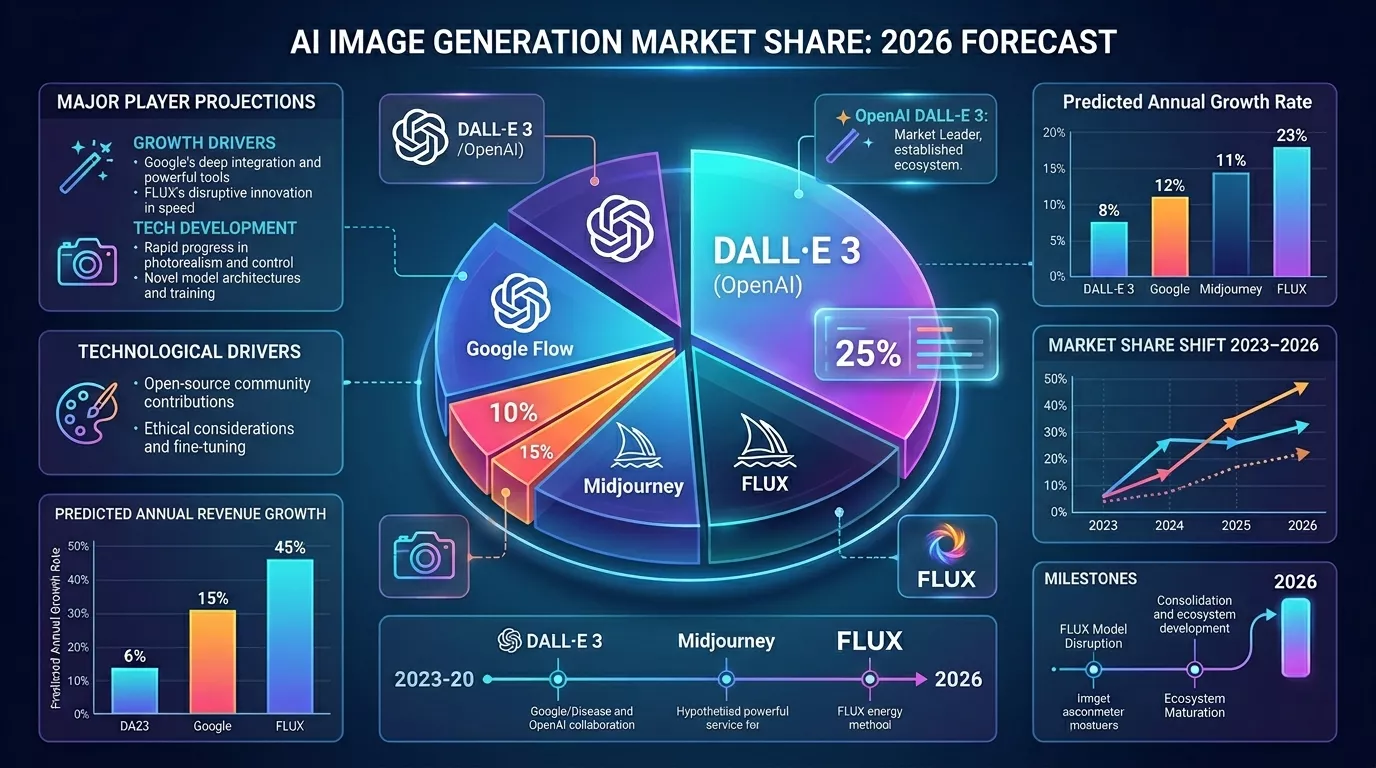
The AI image generation market has fragmented. Instead of a single dominant player, different models excel at specific tasks — text rendering, photorealism, artistic coherence, commercial safety, or speed. Black Forest Labs’ FLUX family captured close to 40% of image generation messages, while Google’s Imagen 3 took nearly 30%.
This means the smartest creators aren’t picking one tool and sticking with it forever. They’re using:
- Google Flow for video and cinematic still images
- GPT Image 1.5 (via ChatGPT) for quick iteration and content marketing images
- Adobe Firefly when commercial copyright indemnification is critical
- FLUX or Midjourney for specific artistic styles
Adobe Firefly continues to be the only major consumer AI image generator offering explicit enterprise indemnification that covers copyright claims.
The era of “one tool to rule them all” is over. The winners in 2026 are the people who know which tool to grab for which job.
External Link: For ongoing coverage of the AI creative landscape, MIT Technology Review’s AI section is one of the most reliable independent sources.
External Link: Google’s official Flow blog updates at Google Labs Blog.
Our 2026 Verdict: Google Flow vs DALL-E 3
After going through every angle of the Google Flow vs DALL-E 3 comparison — quality, pricing, video, editing tools, and real-world use cases — here it is, straight:
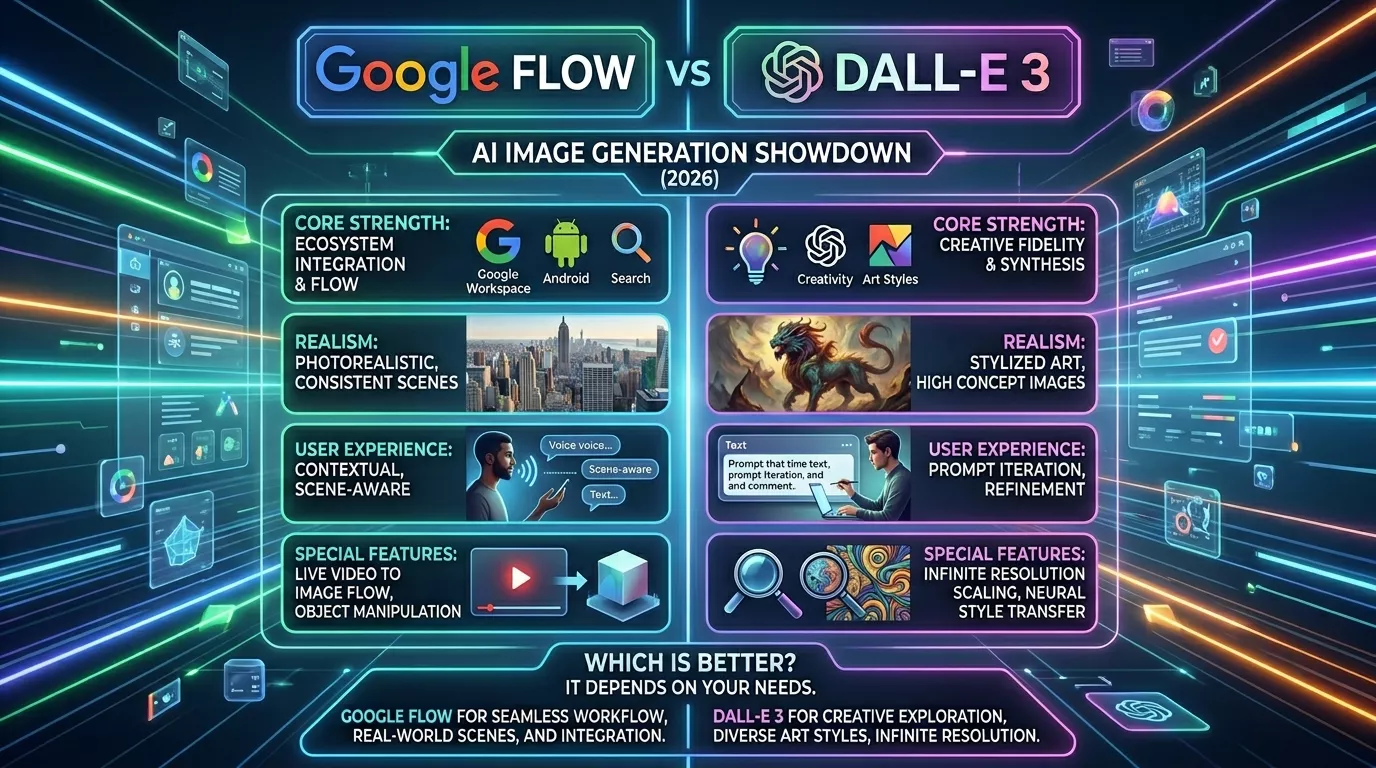
Google Flow has become something genuinely special in 2026. The February update — merging Whisk, ImageFX, and Flow into one workspace, adding Nano Banana Pro, redesigning the entire interface, and pushing Veo 3.1’s video capabilities further than anything else in the consumer market — turned Flow from a promising tool into a serious creative platform.
DALL-E 3’s legacy is real, but its active life is ending. It changed the industry. It proved that AI image generation could follow complex human language. But GPT Image 1.5 has replaced it, and the transition is mostly painless. If you loved DALL-E 3, you’ll be fine with what comes next.
The practical choice for mid-2026:
- Start with Google Flow if visual storytelling, video, or cinematic work is your goal
- Start with ChatGPT (GPT Image 1.5) if you want the fastest, most accessible path to marketing images and creative assets
- Use both if you’re serious about AI-powered content creation — they genuinely complement each other
Internal Link: Want to stay ahead of every major AI tool update? Bookmark WhiskaiLabs.net — we cover AI tools, reviews, and tutorials that are actually useful for creators and businesses in 2026.
Quick Summary (Bookmark This)
- Google Flow in 2026 = Unified creative studio with Veo 3.1 video, Nano Banana Pro images, lasso editing, camera control — the most powerful free-to-start AI creative tool available
- DALL-E 3 in 2026 = Officially deprecated May 12, 2026 — replaced by GPT Image 1.5 in ChatGPT; still accessible via Bing Image Creator
- GPT Image 1.5 = The real successor to DALL-E 3 — better quality, same platform, same price
- Both tools remain useful — just for different jobs
- The AI creative market has fragmented — the smartest creators use multiple tools strategically
Article Word Count: ~3,300 words
Last Updated: May 19, 2026
Sources: Google Labs Blog, OpenAI official documentation, Social Media Today, The Decoder, MindStudio, OnyxRanked, MIT Technology Review
Disclosure: This article contains no sponsored content. All tool mentions are based on publicly available, verified information as of the publication date.
Tags: Google Flow 2026, DALL-E 3 deprecated, GPT Image 1.5, AI image generator 2026, Google Flow vs DALL-E 3, Nano Banana Pro, Veo 3.1, best AI tools creators 2026, Google Flow update February 2026, AI image comparison