
How to Use Whisk AI Easily: Step-by-Step Beginner Tutorial (2026)
If you’re hearing about Whisk AI for the first time, you’re probably asking a very simple question:
How do I actually use Whisk AI without feeling lost or overwhelmed?
You’re not alone. Most beginners feel curious about AI image tools, but they stop because tutorials feel too technical or robotic. This guide is different.
In this beginner-friendly tutorial, you’ll learn how to use Whisk AI step by step — explained in a calm, practical way, just like we’d explain it to a friend or family member.
No hype.
No complicated terms.
Just clear guidance that actually helps.
What Is Whisk AI and Why Beginners Like It
Before learning how to use Whisk AI, it helps to understand what it really is.
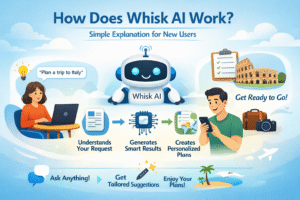
Whisk AI is an AI-powered image generation tool that turns simple text descriptions into images. You describe an idea in normal language, and the system creates a visual interpretation of that idea.
What makes Whisk AI beginner-friendly is its approach:
-
It understands natural wording
-
It doesn’t require design skills
-
It encourages learning through experimentation
What Is Whisk AI? An Easy & Powerful Beginner-Friendly Guide (2026)
How to Use Whisk AI as a Beginner (Getting Started)
Let’s start from zero.
You don’t need special tools or paid software. To begin using Whisk AI, you only need:
-
A modern web browser
-
Stable internet
-
A basic idea of what image you want
That’s it.
You don’t need prompt engineering knowledge or creative background. Whisk AI is built for everyday users.
How to Use Whisk AI Step by Step for Image Creation
This is the core part of the tutorial. Follow these steps calmly.
Step 1: Open Whisk AI
When you open Whisk AI, the first thing you’ll notice is the clean interface. There’s no clutter, no confusing menus — just a space to describe your idea.
This simplicity is intentional. It helps beginners focus on creativity, not settings.
Step 2: Understand the Prompt Box
The prompt box is where everything begins.
Think of it like explaining a scene to someone who can imagine really well. You don’t need long sentences. You just need clarity.
Good prompts usually include:
-
What the image is about
-
Where it takes place
-
How it should feel
Step 3: How to Use Whisk AI Prompts the Right Way
Here’s a beginner-friendly example:
“A quiet coffee shop with warm lighting and a relaxed atmosphere”
Why this works:
-
Clear subject (coffee shop)
-
Clear environment
-
Clear mood
When learning how to use Whisk AI, always start simple. You can add details later.
Step 4: Generate the Image
Once your prompt is ready:
-
Click generate
-
Wait a few seconds
-
Observe the result
Don’t expect perfection on the first try. Instead, ask:
-
Did it understand my idea?
-
Is the mood close to what I imagined?
This mindset helps you improve faster.
How to Improve Results When Using Whisk AI
Many beginners think better results come from longer prompts. That’s not true.
Better results come from small, smart changes.
Example:
Original:
“A forest path”
Improved:
“A peaceful forest path with soft morning light”
You didn’t complicate it — you clarified it.
Once you understand how to use Whisk AI, these adjustments start feeling natural.
Using Styles and Templates in Whisk AI
Depending on the version, Whisk AI may offer styles or templates.
Styles change how the image looks, not what it shows.
Beginner tip:
-
Start with realistic or neutral styles
-
Avoid mixing too many styles at once
Templates are helpful when you feel stuck. They give structure and teach you how prompts are built.
Whisk AI Templates: Complete Guide to Image Generation, Styles & Creative Workflows
Why Small Changes Matter So Much in Whisk AI
New users often wonder why one word can change the entire image.
This happens because Whisk AI:
-
Interprets mood words strongly
-
Responds to context, not commands
-
Predicts visuals based on learned patterns
This is normal AI behavior. Learning how to use Whisk AI means learning how language influences visuals.
Common Mistakes When Learning How to Use Whisk AI
Let’s save you some frustration.
Avoid these mistakes:
-
Writing very long prompts
-
Copy-pasting prompts from other AI tools
-
Expecting photo-perfect realism every time
-
Changing everything at once
Whisk AI works best when you guide it gently.
Real Beginner Use Cases for Whisk AI
Once you’re comfortable, Whisk AI becomes very useful.
Blog & Website Images
-
Custom featured images
-
Topic-specific visuals
-
Consistent branding
Social Media Content
-
Eye-catching posts
-
Story backgrounds
-
Creative concepts
Learning & Practice
-
Visual thinking
-
Creative confidence
-
AI understanding
Whisk AI Examples: Practical Guide to Image Generation, Styles & Creative Results
Is Whisk AI Safe and Responsible to Use?
Yes — when used responsibly.
Important things to remember:
-
AI images are not factual proof
-
Small inaccuracies are normal
-
Always review images before publishing
For more context, explore:
-
Google AI tools → https://ai.google
-
Responsible AI development → https://blog.google/technology/ai/
These external resources help you understand the broader AI ecosystem.
How Using Whisk AI Becomes Easier Over Time
At first, you think too much.
Then something changes.
You start to:
-
Predict how wording affects images
-
Understand what details matter
-
Feel confident experimenting
That’s when you truly understand how to use Whisk AI — not by rules, but by experience.
Final Thoughts: Is Whisk AI Good for Beginners?
If you’re honestly asking whether Whisk AI is worth learning, the answer is simple:
Yes — especially for beginners.
Not because it’s perfect, but because it’s forgiving, simple, and encourages creativity instead of fear.
Take your time.
Experiment calmly.
Let curiosity guide you.
That’s the best way to use Whisk AI.